
What a Seed Phrase Is
I want to talk straight about how does a seed phrase work. A seed phrase is just a list of words. Usually it’s 12 or 24 words, though you might occasionally see 15, 18, or 21. The wallet app spits this list out when you first set things up. It’s the master key to your crypto. If you’ve got the words, you’ve got the money. Simple as that.
The words come from a fixed list of 2,048 words, part of a rule called BIP39. I like to think of it as a human-friendly way to read a long random number. Your crypto keys are just big numbers. The words stand in for those numbers so you can actually write them down like a normal person. A digital cryptocurrency wallet only holds the keys, not the coins themselves.
Your cryptocurrencies are not “in” your wallet. They are on the blockchain.
The phrase is also called a recovery phrase, mnemonic, or backup words. Whatever you call it, it does one big job: it lets you rebuild your entire wallet on a new device. That’s why I tell people to treat it like cash-maybe even more carefully. Lose the words and you lose the path to your funds. No bank is going to mail you a replacement.
Most wallets show the words on screen exactly once. You have to copy them down right then. The list looks random, and it is. Each word is a slice of a big random seed. From that seed, all your addresses grow. I think of it like the root of a tree: cut the root, the tree dies; keep the root, the tree can grow anywhere.
How a Seed Phrase Gets Made
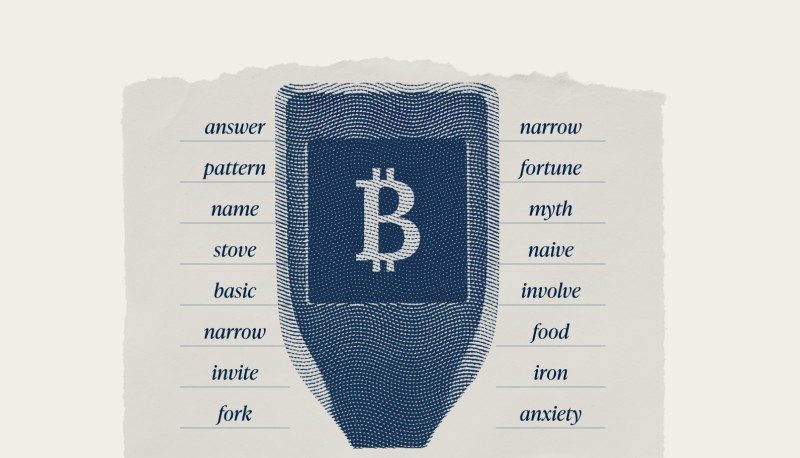
When you open a new wallet, the software picks random words. That’s the seed generation step. Those words then feed a math process that generates all your private keys. From those keys you get public addresses where coins sit on the blockchain. The whole thing is deterministic, meaning the same words always yield the same keys.
The most common crypto wallet type is a phone app, but hardware devices do the exact same thing. Both follow the BIP39 standard so the words work across brands. I find that pretty cool-one list, many uses. You’re not locked into one company.
Steps When You Make a Wallet
- Wallet creation: you set up a new wallet using an app or a hardware device.
- Seed generation: the wallet cranks out a random word list.
- Key derivation: the words spawn all your private keys.
- Address creation: public addresses spring from those keys.
The same words will always generate the same keys on any device. That’s the whole point of a deterministic system. Lose your phone, buy a new one, type in the words, and your coins show up. No company required. This is self-custody in a nutshell-you hold the proof, not some server.
Under the hood, the wallet grabs entropy (a fancy word for randomness), then hashes it to make a checksum. It splits the bits into 11-bit chunks, each pointing to a word. That’s why the count is 12 or 24. The math is solid. I won’t pretend I could do it by hand, but the idea is simple enough.
What a seed phrase is and how BIP39 generates it
The BIP39 Standard and Word List
BIP39 is a tech rule from 2013 that lays out how to turn random bits into words. The list has 2,048 words. Each word maps to a chunk of binary data. Most wallets-Trust Wallet, MetaMask, Ledger, Trezor-use it. So a phrase from one can be plugged into another. That cross-compatibility is a lifesaver if a device breaks.
Here’s a fun fact I learned: because of the word list, only the first four letters of each word matter. No two words share the same first four. But I still write the full word to avoid dumb mistakes. Some metal backups only stamp the first four, which is fine-the machine reads the full word anyway.
Only the first four letters really matter. There are no two words on the list that share the same first four letters.
The words exist in many languages too. The point is a common tongue for machines to speak. If you use a reputable crypto wallet , it’ll follow this rule and give you a proper phrase. Sketchy no-name apps might not. That’s a risk I wouldn’t take with real money.
You might wonder if word order matters. Yes, it absolutely does. The sequence is part of the seed. Swap two words and you get a different wallet-likely empty. So write them in the exact order shown. I double-check mine by counting on my fingers like a kid. Works every time.
Seed Phrase vs Private Key vs Wallet
Folks mix these up all the time. A private key is one long number that controls a single address. A seed phrase is the mother of all those keys. A wallet is just the app or device you use to see and send coins. Think of the wallet as a window, the keys as the door, and the seed as the master key that copies the door.
The system uses private key encryption and public key encryption to prove you own coins. Public keys make receive addresses. Private keys sign sends. The seed makes both. Without the seed, you can’t recreate the private keys, so you can’t sign.
Quick Element Comparison
- Seed phrase: 12–24 readable words; master backup, full restore.
- Private key: 256-bit number; signs transactions, proves ownership.
- Public key: comes from private key; makes receive addresses.
- Wallet: software or device; tool to manage keys and sends.
Again, the coins live on the blockchain. The wallet just holds the proof. The seed phrase lets you remake that proof anywhere. This is why I say the phrase is the boss-not the app, not the device, the words.
If you see a safest online crypto wallet claim in some ad, remember that the wallet interface is just a view. The real power is the phrase. Keep it offline and the online part can’t hurt you much.
Why Your Seed Phrase Is the Boss
I can’t stress this enough. The seed phrase is the only way back if your device dies. No seed, no funds. At normal banks they reset your password. In crypto, you’re your own bank. Scary but true. The freedom is real, but so is the duty.
Why the Seed Phrase Rules Your Crypto
- Recovery: if your device breaks, only the words bring funds back.
- Security: someone with your device but not the words can’t move coins.
- Portability: you can move your wallet to a new app or device.
- Simplicity: one list instead of a bunch of separate keys.
If someone steals your seed phrase, they effectively become you.
They say a big chunk of bitcoin is lost forever because folks misplaced their words. That’s a sad fact. The phrase is a single point of failure. Protect it like your house key, but way more. I keep mine in two places, both offline.
In a multisig setup, the seed is just one of several keys, so the boss role is split. But for most users with a basic wallet, the phrase alone is the crown. Treat it that way. Don’t type it into forms. Don’t screenshot it. The blockchain doesn’t care who you are, only who holds the words.
12 Words or 24 Words
Which length is better? Both are safe. A 12-word phrase has 128 bits of randomness. A 24-word has 256 bits. The longer one adds guard against future computer tricks that don’t exist yet. Think of it as a longer password for a lock that’s already strong.
Brute forcing 12 words would take billions of years. The math is on your side. The real risk is human error, like snapping a photo. I use 12 for small amounts and 24 for long storage, but that’s just me. Either works if generated properly.
Length Differences
- 12 words: 128 bits; easier to back up; fine for moderate sums.
- 24 words: 256 bits; longer to write; good for big portfolios.
- Both pull from the same 2,048-word list under BIP39.
- Neither can be guessed in practice if made right.
Don’t overthink length. Just make sure the device generates it with good randomness. Then store it well. A 12-word phrase written on a napkin beats a 24-word phrase saved in your email. Storage matters more than the count.
Some new users fear the shorter one is weak. It’s not. The number of possible 12-word combos is about the same as atoms in the universe. No machine on Earth will guess yours. So don’t let length stress you. Focus on hiding the paper.
Ledger's Kyle Thornton on seed phrase basics and security
Can Someone Guess Your Seed Phrase
People worry about this. The answer is no-not if your wallet made the words properly. There are more possible 12-word combos than atoms in the universe. A hacker won’t guess yours. The math is too big to beat.
They’ll try to trick you instead. Phishing, fake apps, hidden cameras. The weak link is the human, not the math. So keep your words off screens and out of sight. I cover my hands when writing them-old habit from spy movies.
Instead of attacking the math, hackers focus on finding where you’ve written those words down.
If you see a safest online crypto wallet claim from some ad, remember: the phrase must never touch the net. Online storage is the enemy. A thief doesn’t need to guess when they can just read your cloud backup.
The realistic threats are simple. You click a fake link, type words, gone. You save a pic, phone syncs to cloud, gone. You tell a “support” guy, gone. The phrase is safe only when it stays physical and private. Keep it that way and sleep fine.
Adding a Passphrase for Extra Security
You can add a 13th or 25th word. This is a passphrase you choose. It makes a totally different wallet from the same seed. So if someone finds your 12 words but not your extra word, they get an empty decoy. Nice trick.
But watch out. If you forget that extra word, your funds are lost. No reset. I think a passphrase is smart for some, but multisig is safer for others. More on that later. The passphrase must be exact-caps and spaces matter.
Passphrase Facts
- Optional word on top of the random seed words.
- Each different passphrase makes a new set of keys.
- If forgotten, the funds are lost with no recovery.
- Adds complexity to your backup routine.
Some wallets like Singlesig use this a lot. Just know the trade-off. The most secure hardware wallet still can’t save you from a lost passphrase. Write it down too, or don’t use one. Half measures here are dangerous.
A passphrase can hide a decoy wallet with small funds, while the real stack sits behind the extra word. That’s a neat spy move. But if you die and your family only finds the seed, they see the decoy and think you were poor. So tell someone or leave a note in your will. Plan ahead.
Making a New Wallet and Your Seed
Let’s walk through a basic setup. Say you grab a reputable crypto wallet app. You tap create new wallet. It shows 12 words. You write them on paper in order. Then you confirm by typing them back. Done.
Hardware devices like Ledger or Trezor force you to do this. You might ask how does trezor wallet work . It shows the words on its screen, you note them, done. Never let a device come with pre-set words. That’s a scam. If the box already has a phrase, throw it away and buy a new one.
Always generate your seed phrase yourself on new device.
If you lose the seed for a hardware wallet, the best move is to make a new seed and send coins there. Simple but costs a little fee. I’d rather pay a few cents than risk a leaked phrase. Some software wallets skip the backup prompt, so check settings. Move to a proper HD wallet if yours doesn’t give words.
The setup takes five minutes. The payoff is years of safe access. I do it in a quiet room with no phone camera pointing at me. Paranoid? Maybe. But better than losing life savings to a stray webcam.
How to Store Your Seed Phrase Safe
This part is key. The best way to keep your crypto safe is an offline physical backup. Write on paper with permanent ink. Or engrave on steel. Steel costs more but survives fire. I use both-paper at home, steel at bank.
Never take a photo. Phones auto-upload pics to the cloud. Malware can read them. The golden rule: no digital copy, ever. I keep mine in a home safe and a bank box. Two copies, two places, both off the grid.
My Simple Storage Rules
- Write it on paper or metal, never on a phone file.
- Keep it in a safe or bank box, offline only.
- Never share with anyone, not even support staff.
- Split it in parts if you want extra safety.
The golden rule: your seed phrase should never exist in digital form.
For big holdings, look at best crypto wallets hardware plus metal plates. Products like Cryptosteel or Billfodl run fifty to a hundred fifty bucks. Worth it if you’re holding life savings. A fireproof safe adds another layer. Don’t skip this if your stack is large.
Splitting the phrase into two halves stored at a friend’s house and your house is okay, but know that a missing half means no funds. Some use Shamir backup to split into three pieces where two rebuild. That’s advanced. For most, one full copy in a safe is enough. Just don’t lose the safe.
Scams That Hunt for Your Words
Scammers love seed phrases. They know the phrase equals money. So they pretend to be support. They make fake sites. They slip malware on your PC. The goal is always the same: get the words.
Scams That Hunt for Your Words
- Phishing sites fake wallet logins to ask for words.
- Fake support folks message you on social media.
- Malware scans your files or keystrokes.
- Pre-loaded wallets sold with known seeds.
Another trick: someone posts a “found” phrase with coins on it. You try to grab the free money, but a bot sweeps your deposit. Don’t touch public phrases. Ever. If it sounds too good, it’s a trap. I ignore any phrase I see online completely.
No legitimate service will ever ask for seed phrase.
If you use a ngrave crypto wallet or any brand, the rule stands. The company will never call you for words. Real support asks for logs, not your master key. Hang up, close tab, move on.
Side-channel attacks are real too. A hidden camera in a cafe could catch your words as you set up. Do it at home, doors closed, phone face down. The human element is the soft spot. Keep it tight and you win.
Seed phrase versus private key: the actual difference
What If You Lose or Change Your Seed
Lose the words and the device? Funds are gone. No forgot-password button. That’s the deal with self-custody. Blockchain still has the coins, but no key means no move. I hate to sound dark, but that’s the truth.
You can’t change a seed like a password. You make a new wallet and send coins over. If you think your seed leaked, move fast. Every hour counts. I’d rather pay a network fee than wake up empty.
Lost or Changed Seed Notes
- If both seed and device gone, wallet can’t be recovered.
- You change by making new seed and moving funds.
- If seed seen, transfer all coins to fresh wallet now.
- Memorized only is not enough; keep physical copy.
Most hardware wallets make a seed at start. If yours didn’t, move to a proper one. Your peace of mind matters. Some old wallets use weird formats that don’t follow BIP39. Check before you trust them with rent money.
If you still have device access but lost the paper, send coins to a new seed right away. Don’t wait for the device to break. Devices fail. Paper floods. Act before trouble hits.
Trying to Memorize Your Seed

Some folks try to learn the words by heart. BIP39 was built in 2013 to make backup easier, but memory alone is risky. I wouldn’t trust my brain for 24 words. Paper first. Memory second.
You can use memory tricks. Group words into silly stories. Walk through a mental house. But still write it down. Fire or theft could take the paper, so a memory backup helps then. But don’t rely on it. I practice mine once a month just in case.
Memorizing is NOT sufficient. You will forget narratives, mnemonics, order.
The words are limited to 2,048 options, so drawing them is risky too. Keep a hard copy in a safe place. That’s the real fail-safe. If you must memorize, do it private, on paper, then burn the paper. Never type the words on a computer to practice.
A memory palace can hold a 12-word list for a while. But life gets busy, you get sick, you forget. The phrase is too important to leave to mood. I treat memory as a spare tire, not the main wheel.
Multisig and Sharing the Risk
If you use one seed alone, that’s a single point of failure. Multisig fixes this. It needs multiple keys to send coins. Your seed is just one piece. Lose one, funds still safe. That’s a big relief for long-term holders.
This lets you spread backups in different places. Redundancy beats a single sheet of paper. I like the idea for big savers. It cuts the “one mistake ruins all” fear. You might need two of three keys, for example.
Multisig Basics
- Needs several keys to approve a send.
- Seed phrase is one key, not the whole lock.
- Allows geographic split of critical items.
- Reduces single-point-of-failure risk.
Some services use vaults with this method. It’s more complex but calmer for long-term hold. You can keep one seed at home, one at bank, one with a friend. Two must agree to move coins. A thief with one word gets nothing.
For a normal user with small funds, a single seed in a safe is fine. But as your stack grows, learn multisig. It turns the boss into a committee. That’s a good thing when the stakes are high.
Ledger Recovery Key Backup Card
There are helper gadgets. The Ledger Recovery Key is a card that stores your 24-word secret on a secure chip. It talks to Ledger devices by tap. It is not a wallet, just a backup. I see it as a complement to paper, not a replacement.
It uses a pin and wipes after three wrong tries. If you like tech, it’s an option among best crypto wallets hardware add-ons. The card is built with certified security bits. Factory made under tight control. For me, a metal plate is cheaper, but this is neat for some.
It is a complement to, not replacement of, traditional Recovery Sheet.
The device communicates only with the wallet, not the internet. That keeps the secret off clouds. Still, you must guard the card like the paper. If someone gets card and pin, they get the words. So treat it like cash and lock it up.
Some folks want a most secure hardware wallet plus this card for ease. It’s okay. But the old rule stands: never type words into a computer. The card just moves them between Ledger gadgets. That’s a narrow use, and a fine one if you stay offline.














Comments on “How Does a Seed Phrase Work, and Why It’s the Boss of Your Crypto Wallet”
No comments yet. Be the first to share your thoughts.