

Why I Cleaned Up My Crypto Feed
My crypto feed is mostly noise. Like, embarrassingly so. I got tired of opening Twitter and immediately regretting my life choices because of junk posts and price spam, so I trimmed the whole thing down to a few honest voices. The crypto capital venture twitter accounts I keep around are founders and funds who actually break down what they're seeing-they talk about early-stage bets and onchain trends in plain words, not in some arcane priest language.
I don't want hype. I want real info from people who put actual money behind their words (because nothing focuses the mind like your own capital at risk). When you follow the right crypto capital venture twitter feeds, you save yourself hours of scrolling through garbage. The rest of the feed is a dumpster fire, frankly-like a dumpster fire that someone then lit on fire again.
If you're new, you might start with the standard best crypto websites to get the base knowledge. But the human side of the crypto capital venture twitter world is where I actually learn the most. I also skip the 'best crypto tokens to buy now' threads because they age about as well as milk left in the sun.
Pantera Capital On Crypto Capital Venture Twitter
Pantera Capital is one of the old guard names in blockchain funds-like, they were doing this before it was cool and also before it was deeply uncool. Their account is @PanteraCapital. The profile says they joined the platform back in January 2014, which in crypto years is approximately the Bronze Age. They're based in San Francisco (shocking, I know). They follow about 471 accounts and have over 221 thousand followers. That's a pretty massive reach for a fund that isn't just posting memes.
The account posts their own thoughts and reposts founders they back. On my personal crypto capital venture twitter list, they're a must-follow. They were the first U.S. institutional asset manager focused solely on blockchain tech, and that singular focus shows in their feed-it's not a vague "innovation" account, it's a crypto-native fund thinking out loud.
Quick Pantera profile facts
- Handle is @PanteraCapital (obviously)
- Joined the platform in January 2014 (crypto dinosaur status)
- About 471 following and 221.8K followers (asymmetric, as it should be)
- Over six thousand posts made (they actually use the thing)
They pin a letter about AI and blockchain written by Cosmo Jiang, a general partner there. The letter makes the point that artificial intelligence has moved from a "promising tech" to basically a base layer of modern business-like the concrete under the skyscraper. Investors are watching this shift closely, because it's either the biggest opportunity or the biggest fool's errand since pets.com.
What Pantera Posts About AI And Blockchain
Pantera's feed has this recurring theme of tying AI to crypto, which at first sounds like buzzword bingo but is actually interesting. One post points out that AI agents aren't going to stroll into a Bank of America and open a checking account-they need digital money, i.e. they need crypto. Dan Pantera (note: not the same as the fund name confusion, but whatever) notes that as "agentic finance" grows, crypto becomes key infrastructure. He goes as far as saying there's no important future for AI without crypto as a core part. Bold claim, but they're putting their fund's money behind it.
A repost from B3 shares Cosmo Jiang's argument that AI and blockchain push each other up. Blockchain gives AI open systems to pull from; AI then hides the complex UI/UX crap that previously held crypto back from normal humans. That kind of plain breakdown is exactly why I keep them on my crypto capital venture twitter list-they're not just shouting "AI crypto metaverse!!!", they're explaining the mechanics.
For those still figuring out that whole 'how crypto works for beginners' thing , these posts help. They don't talk down to you; they just show the links between tech and money in a way that doesn't make you feel like an idiot.
Tokenization Talk From Pantera
Pantera also pushes the idea of tokenization-turning real-world assets into tokens, which sounds boring until you realize it might rewire capital markets. Franklin Bi shared a visual called the Tokenization Progress Index. He likens it to a galaxy with its own laws (ambitious metaphor, but okay). New primitives, liquidity flows, and composability are the new fronts for capital markets. Diego built an interactive site to map this out from Pantera's tokenization report, which is a level of effort most funds don't bother with.
WisdomTree Prime reposted that tokenization brings access to the masses, not just to hedge funds with mahogany desks. Public blockchains are the base layer. WisdomTree built on public chains from the start and runs across eight of them. This fits the broader crypto capital venture twitter theme of open access-the whole point is that the gatekeepers get removed.
Jay Yu posted thoughts on tokenized startups and pre-IPO access-i.e., letting normal people into deals usually reserved for the golf club crowd. He talks about perps, SPVs, and closed-end funds as ways to rewrite access to hot companies. I like that he uses plain words, not just banker talk that sounds like a foreign language designed to exclude you.
Tokenization's biggest opportunity is bringing access to the masses, and those users are already on public chains.
Fred Wilson And Union Square Ventures
Fred Wilson is a venture capitalist since 1987-meaning he was making bets before the web was even a thing for most people. He co-founded Flatiron Partners in 1996 and launched Union Square Ventures (USV) in 2003. His blog, AVC, has been daily since then, which is a staggering feat of consistency. That open-book thinking is rare in venture capital, where most funds treat their thesis like a state secret. He just writes what he backs and why, like a guy sharing his homework.
USV's thesis is betting on large networks of engaged users-pretty simple, but hard to execute. They put a Series A into Twitter when it was four months old (imagine that kind of conviction now). They backed Etsy, Tumblr, Zynga, MongoDB, Kickstarter, DuckDuckGo. They were seed investors in Coinbase before it went public via direct listing in April 2021. Wilson was talking about Bitcoin as early as 2011, which in VC crypto cred is roughly like being at the signing of the Declaration of Independence.
Some USV backed names (a random sampling)
- Etsy (invested 2008, IPO 2015-a rare win)
- Tumblr (sold to Yahoo for $1.1 billion in 2013, rest in peace)
- Zynga seed round (we all played FarmVille, don't lie)
- Coinbase seed before public listing (the crypto one that mattered)
Wilson is one of the most vocal institutional crypto supporters, which is like being a vegetarian in a steak house-people notice. USV backed Ethereum early, plus Filecoin, Dapper Labs, etc. When the crypto winter hit in 2022 and Coinbase's value dropped faster than a lead balloon, he kept his conviction instead of panic-selling his opinions. USV even raised $625 million in new funds that same year. That's the opposite of retreating.
On the crypto capital venture twitter feed, Wilson stands out because he blogs daily and thinks out loud-he's basically a public diary of a VC mind. He talks about AI, synthetic biology, energy transition, and crypto as big shifts happening simultaneously, which is both exhilarating and overwhelming. He warns the AI wave looks a lot like the crypto hype cycle of 2021: tons of excess and grift on top, but real tech underneath. Sage observation from a guy who's seen multiple cycles.
AVC Blog Moving Onchain
Wilson moved his blogging life from web2 to web3, which is the kind of sentence that either sounds visionary or insane depending on the day. He says old AVC.com stored posts in a closed database and lacked composable services (meaning you couldn't easily build on top of it). He used Mirror and then Paragraph, both of which store posts onchain via Arweave. His new home is avc.xyz. Posts stay forever and identity ties to a wallet-no more depending on a centralized server that could vanish.
He wrote about Chris Dixon's book Read Write Own (Dixon runs a16z crypto fund). The book's thesis is that blockchain networks let users own their identity, posts, money, art-instead of renting them from Mark Zuckerberg. Wilson calls this web3, and frames the phases nicely: read (web1), write (web2), own (web3). It's a clean way to think about the evolution, even if the buzzwords make some people roll their eyes.
In his forecasts, Wilson argues that blockchains will eventually disappear behind better consumer interfaces-users will trade and interact without needing to know the base layer, just like you don't know what TCP/IP is when you send an email. That's the same argument he made about the consumer internet back in 2004. I find that long view weirdly calming in the otherwise screaming, noisy crypto capital venture twitter world.
If you ever wondered what 'nft' means when people say it in text or lived through the the great nft crash , Wilson's honest post about an NFT scam he personally faced is a good read. He lost 46 NFTs and got 38 back via a colleague-real talk, not a pitch, which is refreshing when most crypto content is someone trying to sell you their jpeg.
Chapter One And Product Obsessed Founders
Chapter One is @chapterone on the platform. They're a tech investment firm for product-obsessed founders-which is a nice change from funds that are just "hot sector" obsessed. The team comes from X (formerly Twitter), Tinder, and Robinhood, so they've built consumer stuff that normal people actually use. They joined in October 2016, follow 101 accounts, and have 22.8K followers with about 1,808 posts. A smaller account, but quality over quantity.
Their feed is lighter-less "macro thesis," more human. They post about deals like Maven, Pipe, Spot, Metafy, and they cheer on founders like proud parents. One post literally says building shit on a Friday night with wine feels good. That human voice is rare among funds, which usually sound like press release machines.
Chapter One co-investors after early deals (a.k.a. the cool kids table)
- Craft Ventures
- Slow Ventures
- Founders Fund
- BoxGroup
They also joke about buying domains after years of internal talks, and they did a brand collab with YETI Coolers (because why not). This isn't heavy research output, but it shows how real people run a fund-not robots in suits. I add them to my crypto capital venture twitter mix because they back product-first teams, some of which are in crypto, and that perspective is a nice palette cleanser.
For anyone using those 'learn and earn' apps like coinbase , Chapter One's plain updates are a nice add. They don't pay you to learn, but they show the builder side-the actual grinding of making something, which is more educational than a quiz for $3 of token.
Haseeb Qureshi At Dragonfly
Haseeb Qureshi is @hosseeb, a managing partner at Dragonfly, a crypto fund. He's a programmer, writer, teacher, speaker, and effective altruist-a résumé that makes you feel lazy. He taught web3 entrepreneurship at UC Berkeley, and before crypto he was a top poker player sponsored by Full Tilt. So he went from reading opponents' tells to reading market tells. Fair enough.
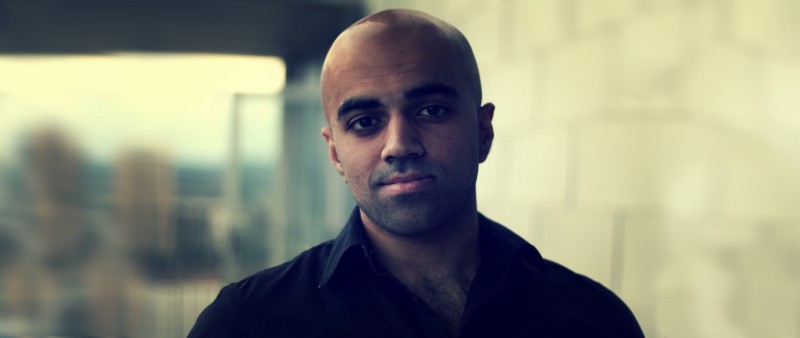
His path went from poker at age 19 to a coding bootcamp in 2015, then onto Airbnb's anti-fraud team (fitting for a poker player). In 2017 he got convinced blockchains would change the world and jumped ship. He found a bug in Bancor, worked at Earn.com (later acquired by Coinbase), and cofounded a stablecoin startup. With Bo Feng, he built Dragonfly-a fund that's become a serious voice in the space.
He's given away 33% of his income to charity since 2015, which is a stance that probably shapes his view of the world beyond just returns. On crypto capital venture twitter, he explains hard topics in plain language-no prerequisite PhD required. He early backed Avalanche, NEAR, Starkware, Filecoin (via Meta Stable), showing he was there before the crowd.
I don't go to him for the aptos crypto price talk-that's not his lane. I go for his clear breakdowns of how a fund actually thinks, because he shows how a crypto fund weighs bets instead of just yelling at a chart.
Other Voices Like Elad Gil And Chris Dixon
Elad Gil is @eladgil, CEO of Gil & Co, a multi-stage investment firm. He was VP Corp Strategy at Twitter and started mobile at Google-guy's been around big tech's center of gravity. He advises Coinbase, OpenAI, Stripe and more. On a podcast he said Coinbase is like a crypto index, Stripe like an e-commerce index. That's the whole memo in one sentence, which is a gift in a world of 50-slide decks.
Chris Dixon leads a16z crypto and wrote Read Write Own (we mentioned it earlier via Wilson). His take: founders choose a market long before they know if they've hit product/market fit. First to market seldom matters; first to fit wins. Marc Andreessen stresses that the market pulls the product out of the startup, not the other way around. Obvious once you hear it, invisible before.
Alex Danco writes a Substack with over 34,000 subscribers-he was at a16z and penned pieces like "Need Series C? Call a16z" (brutally honest title). Tim Ferriss hosts a podcast that features these voices; he's not pure crypto, but he amplifies the crypto capital venture twitter crowd by having them on to explain themselves like humans.

If you like the usual best cryptocurrency websites for long reads, Danco's newsletter is a solid stop. It is not a site for flr crypto price prediction noise but for framework thinking-actually understanding why things happen, not just when to buy.
Product Market Fit Lessons From VCs
The product/market fit idea came from Andy Rachleff, based on Don Valentine's view (Valentine founded Sequoia, so worth listening). Valentine's mantra: give me a giant market, always. Rachleff says a value hypothesis is the reason a customer actually uses your product. Find that and you've got fit-everything else is details.
When a great team meets a lousy market, market wins. When a lousy team meets a great market, market wins. When a great team meets a great market, something special happens.
Marc Andreessen lists the classic signs of fit: customers buy as fast as you can make the thing, money piles up, reporters call you. Ben Horowitz debunks a few myths: fit is not a one-time big bang (it can be a grind), you can lose it (markets shift), and competition still matters after you find it (shocking, I know).

Signs you might have product market fit (aka the good problems)
- Usage grows without much push (the dream)
- Customers ask for more product (beg, even)
- Money from sales stacks up (nice stacking)
- Press and bankers show interest (both flavors of validation)
Fred Wilson says getting the product right means finding fit, not just launching and hoping. Sam Altman notes hiring before fit slows you down, hiring after fit speeds you up (counterintuitive to the "hire fast" crowd). For the crypto capital venture twitter founders, this lens helps sort the real builders from the hype merchants.
For those asking how to actually learn crypto for beginners , these VC frames are a free school. No token shilling, just how markets actually work-which is a refreshing curriculum.
Protocols Not Platforms Idea
Mike Masnick wrote a piece called "Protocols, Not Platforms" back in 2019 (feels like a prophecy now). He points out the early internet ran on open protocols like email and the web. Then centralized platforms locked users in like a hotel that won't let you leave. He proposes building protocols with many competing interfaces-so no single company owns the front door.
Email is the perfect example: SMTP and POP3 under Gmail, Outlook, Yahoo-low lock-in, you can switch providers without losing your address's meaning. For speech, users pick filters from third parties (like spam filters on steroids). Extremist views get less reach but aren't silenced by a central moderator. User data stays encrypted in personal stores. Radical idea: you own your stuff.
Crypto tokens can fund protocols as usage grows-finally a way to pay for public infrastructure. This ties directly to the crypto capital venture twitter talk because tokens align builders with users, instead of advertisers. It's a fix for open tech that historically lacked cash (see: OpenSSL Heartbleed, where critical code was maintained by a guy on a shoestring).
Move decision making to ends of network. Users subscribe to filters from third parties or build own.
Podcast Crossovers With Tim Ferriss
Tim Ferriss hosts a show deconstructing top performers (the "Tools of Titans" guy). An episode with Elad Gil discussed Coinbase as a crypto index and the power laws in venture (where ~10 companies bring 80% of returns). He quoted Naval: "Valuation is temporary. Control is forever." Which is the kind of line you write on a sticky note.
Another episode with Max Levchin, PayPal co-founder, talked about agentic commerce maybe boosting Affirm (his company). Tim isn't a crypto VC, but he tweets links and lifts these voices up to a bigger audience. I find his show a good way to hear the actual humans behind the crypto capital venture twitter posts-less typing, more thinking out loud.
If you want a break from the endless 'best crypto websites' lists, the audio chats show the human side. You hear them think in real time, not just post a polished take after the fact.
My Short List Of Accounts To Follow
Here is who I actually keep on my crypto capital venture twitter feed. I pick them for plain talk and real stakes-skin in the game. Not as gospel, just as signal in a sea of noise.
Accounts I follow for real insight (my personal mini-list)
- @PanteraCapital for fund-level blockchain and AI posts (the big picture)
- @fredwilson / AVC for daily venture and web3 think (the diary)
- @chapterone for builder-first fund voice (the human)
- @hosseeb for Dragonfly crypto fund clarity (the explainer)
Getting product right means finding product/market fit. It does not mean launching the product.
That quote from Wilson sits with me. I'd rather follow people who show the work than those who shout the next "moon coin" at 3am. The crypto capital venture twitter space is actually small and sane if you just cut the noise-which is the whole point of this post.

Comments on “Crypto Capital Venture Twitter: How a Tiny Handful of Voices Keep the Whole Conversation From Being a Dumpster Fire”
No comments yet. Be the first to share your thoughts.