Good Books on Cryptography: A List That Won’t Melt Your Brain
I used to think cryptography was strictly for spies, math freaks, and people who enjoy a good proof by contradiction. But it turns out there are some genuinely good books on cryptography that hold your hand through the scary parts like a patient kindergarten teacher. Here’s where to start.
If the phrase 'number theory' makes you want to lie down on the floor and take a nap, this roundup of good books on cryptography is for you. From ancient code-making to quantum-proof math that sounds like science fiction, I’ll help you pick a book that matches your brain’s current firmware. No PhD required to read most of these (promise).
What Cryptography Means in Plain Words
Cryptography is the practice and study of secure communication techniques that keep prying eyes away from your messages. It’s what keeps secrets between people and safeguards the data on your devices. Throw in some auth checks and suddenly only the cool authorized users get to see the encrypted info.
Two common methods pop up in basically every book on the topic: the private-key vs public-key duo . One key locks and unlocks, the other uses a pair of keys. Good books on cryptography explain these with clear pictures and code samples so you can grasp how this crypto stuff works when you’re just starting out without breaking into a panic sweat.
Cryptography is the practice and study of secure communication techniques that protect messages from third party observation.
Coin Bureau lists six crypto-investor books
Books for People Who Fear Math
Some good books on cryptography skip the heavy proofs and just focus on real-world use. They help you learn how to pick up crypto as a beginner without crying into your textbook over equations. I like these for a soft launch before the deep end.
My top picks for low math stress
- Break the Code: Cryptography for Beginners by Bud Johnson. It walks you through six types of codes with drawings that are actually funny.
- Cryptography for Kids: So You Want to Be a Spy? by Jennifer Brady. Hands-on puzzles that work for a wide age range (including adults who refuse to grow up).
- Understanding Cryptography by Christof Paar and Jan Pelzl. A practical view with less mathy detail to trip over.
- Cryptography Made Simple by Nigel Smart. Lays out clear goals for what 'secure' actually means.
- Serious Cryptography by Jean-Philippe Aumasson. Plain talk for devs and engineers who don’t need fluff.
Each of these good books on cryptography hands you an early win. You make a code, break a code, and feel like a genius. That early hit of success matters more than people admit.
Start Small With Codes and Puzzles
Break the Code by Bud Johnson describes secret writing methods and how to cook up six different codes. These include letter grouping, reverse trail, shift code, keyword code, date shift code, and twisted route code. Solutions are in the back like a cheating hall pass so you can check your work.
Cryptography for Kids by Jennifer Brady uses fun tasks to teach encryption and decryption. Parents and teachers can hijack it too. It’s a good books on cryptography pick for family time, and the drawings keep the mood light (always a plus).
Stories of Secret Messages Through Time
The Code Book by Simon Singh takes you on a tour of codes from ancient Egypt all the way to quantum cryptography. It covers the Caesar cipher, Enigma machine, and RSA encryption in plain style. You see how secret writing shaped history and won (or lost) wars.
The Mathematics of Secrets by Joshua Holden blends stories with examples of ancient and modern ciphers. He shows the math lurking under the codes. Both are good books on cryptography that read like novels rather than textbooks (a miracle).
By blending historical narratives with practical examples, the author shows how mathematical concepts underlie various codes and ciphers.
Textbooks That Go Light on Theory
Serious Cryptography by Jean-Philippe Aumasson is aimed at devs and security engineers. It covers symmetric and asymmetric encryption, key exchange, and authenticated encryption. It even walks through OpenSSL and NaCl libraries with real examples you can touch.
Understanding Cryptography by Paar and Pelzl shows up in grad courses but keeps the math light. It includes side-channel attacks and chips for mobile devices. These good books on cryptography bridge the gap between hobby and job without drowning you in a sea of Greek letters.
DFIR investigator shares five forensics textbooks
Heavy Math Titles for Serious Study
If you want the deep theory, there are good books on cryptography that lean hard on algebra and number theory. They are not beach reads (unless you’re a very weird beach person) but they build strong roots for real work. I keep one nearby for reference.
Math heavy core titles
- Algebra for Cryptologists by Alko R. Meijer. A self-contained guide for postgrad study (i.e. not for the faint of heart).
- Handbook of Applied Cryptography by Menezes, Van Oorschot, Vanstone. Wide coverage of classical and modern systems (it’s a doorstopper).
- Introduction to Modern Cryptography by Katz and Lindell. Includes zero-knowledge proofs and homomorphic encryption (fancy words, real math).
- Bent Functions by Natalia Tokareva. Proofs and bounds for researchers who love that stuff.
- Handbook of Elliptic and Hyperelliptic Curve Cryptography by Cohen et al. Curve-based methods and algorithms for the dedicated.
- Introduction to Mathematical Cryptography by Hoffstein, Pipher, Silverman. An academic text on the math foundations (you’ll need coffee).
Alko Meijer spent over 30 years in the field and ran a math professorship before pivoting to cryptology. His book is a self-study guide for the tough stuff. The Handbook of Applied Cryptography is often called a bible by practitioners (the non-religious kind).
Practical Books for Developers
Go Cryptography by Anish Nath is for Go programmers just starting out. It covers hashing, key derivation, RSA sign and verify, and more. If you write code, this is a hands-on pick among good books on cryptography.
Cryptography Engineering by Schneier, Ferguson, Kohno, and Thompson covers design principles and real apps. It’s used as a grad reference. Real-World Cryptography by David Wong focuses on applied crypto and common pitfalls, while Cryptography: Theory and Practice by Stinson and Paterson mixes both theory and real use (a two-for-one).
Reading Up on Blockchain and Coins
Mastering Blockchain by Imran Bashir is a technical reference spanning cryptography to DeFi and NFTs. It shows how a blockchain actually gets created and explains the different flavors of digital currency systems. Even a blockchain meetup in the united states would nod approvingly at this one.
If you want the the best way to learn blockchain , this book builds the base. It also touches cryptocurrency vs fiat currency and what the different cryptocurrencies are without the usual hype. I found it a solid bridge from good books on cryptography to distributed ledgers.
This technical reference guide provides an in depth look at the underlying technologies and principles of blockchain, spanning cryptography, decentralized finance, and non fungible tokens.
Crypto That Survives Quantum Computers
Post-Quantum Cryptography by Douglas Stebila looks at math that resists quantum attacks (the sci-fi kind). It covers lattice theory, code-based, multivariate, and isogeny schemes. This is one of the good books on cryptography that plans for the long future.
William Stallings’s book Cryptography and Network Security also talks about quantum-safe standards. It covers PKI, digital signatures, and web security. Cryptography and Network Security is widely used as a grad text and brings many topics under one roof (a crypto umbrella).
Big Reference Books to Keep Nearby
The Encyclopedia of Cryptography and Security by van Tilborg and Jajodia covers a broad range of techniques and protocols. It’s for researchers, practitioners, and students. Handbook of Applied Cryptography fits here too as a grad-level text.
These good books on cryptography are not for a single read. They sit on the shelf and answer questions later. I open them when a term confuses me, and they usually clear it up fast (like a wise bookshelf oracle).
Free Stuff to Learn Beyond Books
You might search crypto classes near me but free online material can teach you a ton. Crypto 101 by lvh is a free intro with practical advice. CryptoPals and Cryptohack give hands-on coding challenges that stick in your head like gum.
Free learning resources I like
- CryptoPals - challenges that reinforce concepts through code (so you actually learn).
- Cryptohack - interactive tutorials and puzzles (fun, surprisingly).
- MIT OpenCourseWare 6.857 - course material on computer security and crypto (free brain food).
- Tanja Lange’s Talks - public lectures on post-quantum topics (smart person, clear talk).
- Mastering Bitcoin cryptography section - explains primitives used in Bitcoin (the OG crypto coin).
- Modern Introduction to Cryptography lectures by Alfred Menezes - online series on lattices and post quantum (deep but free).
These complement good books on cryptography with real practice. You break codes, not just read about them. A blog by Soatok also covers practical crypto engineering if you want more (the internet is wild).
Math Sorcerer recommends Trappe and Washington textbook
Math Background You Might Want
Many good books on cryptography assume you know discrete math, probability, and basic algebra. Linear algebra and number theory help with elliptic curves and finite fields. You don’t need calculus tricks but algorithmic thinking is key (literally the key).
If you lack the base, supplement with study of modular arithmetic and combinatorics. Then the harder books feel less like a wall of terror. Cryptography: A Very Short Introduction by Piper and Murphy gives a concise overview that can prep you too.
Four Core Principles of Cryptography
When reading good books on cryptography, you’ll see four goals repeat like a mantra. They frame why we bother with the math and the code. Keep them in mind as you study (or tattoo them on your arm).
Core principles
- Confidentiality - info stays with the authorized parties (no peeking).
- Data Integrity - data can’t be changed without notice (no sneaky edits).
- Authentication - verify identity of users or systems (are you who you say?).
- Non repudiation - a party can’t deny a sent message (no take-backs).
Mathematics is the backbone of cryptography. Core areas include abstract algebra, number theory, probability, and combinatorics.
Can You Teach Yourself Crypto
Yes, you can teach yourself with dedication and the right resources. Pick a good introductory book or course, then practice by writing programs or breaking codes. Share notes on a blog to reinforce learning (or just to feel smart).
Join communities like CryptoPals for feedback. I did this and it made learning crypto as a beginner feel less lonely. Self-study works if you keep at it and don’t fear the first failures (we all suck at first).
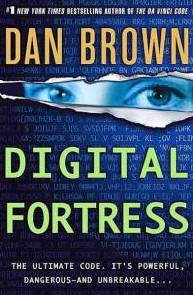
Digital Fortress and Why It's Just a Story
Digital Fortress by Dan Brown is a popular novel about crypto and surveillance. It’s fun but technically wrong in parts. A supercomputer that brute-forces any cipher is pure fantasy, and a rotating cleartext scheme is not a real defense (sorry Dan).
The book paints real cryptographers in a false light and twists how groups like the EFF work. So read it for fun, not as a tech guide. For facts, use the good books on cryptography listed above.
Because of these inaccuracies, Digital Fortress is recommended mainly for leisure reading rather than as a technical reference.
I still think a novel can spark interest even if it’s wrong. Just check the facts in good books on cryptography later. A story got me curious before I found the real texts (it happens).
Community Pictures and Notes
Forum posts and blog snaps show real implementation notes from learners. They remind me that good books on cryptography are just start points. You still need to try things with your own hands (no shortcuts).
I hope this list helps you find a book that fits your brain’s current firmware. The art of secret messages is old but keeps growing. Pick one title and start, and don’t let the math scare you off too soon (it’s just math, not a monster).












Comments on “Good Books on Cryptography: How to Learn the Ancient Art of Secret Messages Without Needing a PhD (or a Strong Will to Live)”
No comments yet. Be the first to share your thoughts.