
What a Decentralized Exchange Actually Is
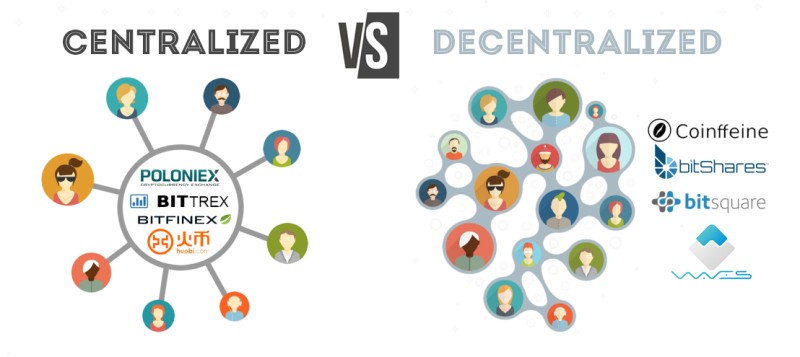
A decentralised exchange is a crypto marketplace where no single company sits in the middle of every trade. You keep your tokens in your own wallet. Smart contracts handle the swap. No one holds your funds except you. That's the core idea.
The phrase "not your keys, not your crypto" got loud after FTX collapsed in 2022 and $8 billion in customer funds vanished. On a centralized exchange like Coinbase or Binance, you deposit Bitcoin into their wallet and trust them to give it back. On a DEX, you sign the transaction yourself. Your tokens never leave your control.
A DEX runs 24/7, weekends included. Traditional stock markets close at 4:30 p.m. Crypto doesn't. A DEX processes trades whenever you want, without waiting for a centralized exchange to open its doors.

The Term "Decentralized Exchange" Means Different Things
Not every service calling itself a DEX works the same way. A 2018 breakdown separated them into three buckets.
Noncustodial Peer-to-Peer Marketplaces
These connect buyers and sellers directly without taking custody. LocalBitcoins was the classic example. The platform matches bids and offers, but your assets never sit on their servers. They typically skipped KYC and AML checks, arguing they weren't in the flow of funds. Regulators saw it differently. The platform itself could still run on centralized cloud infrastructure - so a technologist might call it noncustodial but not fully decentralized.
Custodial Crypto-to-Crypto Exchanges
Binance and Bitfinex fit here. They hold your crypto but don't usually offer direct fiat on-ramps. You need crypto already to trade. They use centralized order books, centralized tech, and centralized management. Trading crypto for crypto doesn't make them decentralized.
Technically Decentralized Exchanges
These run through smart contracts with no central location where the system is stored or managed. Radar Relay on the 0x protocol was an early Ethereum example. Open-source contributors maintained the contracts, not a traditional company. In 2018, these were described as early, low-volume, and slow compared to centralized services. Only a small enthusiast crowd used them.
How Centralized and Decentralized Market Structures Differ
Centralized exchanges bundle a lot of functions: matching orders, holding assets, executing trades, handling withdrawals, often acting as custodian. They combine roles that traditional finance separates - broker, market maker, exchange, clearinghouse. This concentration gives them huge influence over listings, pricing, and custody.
A DEX uses blockchain smart contracts for execution and often automated market makers for pricing. The intended benefits: automated execution, autonomous operation, transparent code, less reliance on a centralized custodian. But the absence of a central operator doesn't remove every intermediary. You still depend on smart-contract developers, blockchain validators, frontend operators, wallet providers, liquidity providers, oracle networks, bridge operators, and governance systems.
The absence of a centralized operator does not remove every intermediary. A DEX ecosystem can still depend on smart-contract developers, blockchain validators, frontends, wallet providers, liquidity providers, oracle networks, bridge operators, and governance systems.
Wallets, Keys, and Buying Your First Crypto
A DEX normally requires a self-custody wallet. MetaMask gets mentioned often - easy to use, open source, stores private keys locally. The advantage over keeping crypto on Coinbase or Binance: your private key doesn't sit on a company's remote server.
Moving serious holdings out of a "hot" wallet (connected to the internet) into cold storage is standard advice. Hot wallets are convenient for frequent transactions but more exposed. Securing backups matters.
Buying your first crypto can involve fees. A 2021 account reported a $100 ETH purchase through MetaMask cost almost 6 percent, combining MetaMask fees, payment provider Transak fees, and Ethereum gas. Average processing time: 13.4 hours, mostly from the payment provider, not the blockchain.
A self-custody wallet doesn't make you anonymous. You can create unlimited addresses, but every transaction is public on the blockchain. Anyone can review your history via a block explorer like Etherscan.
Animated breakdown of how a DEX works
How an Automated Market Maker Swap Works
Many modern DEXs use an automated market maker (AMM) instead of a traditional order book. You trade against a liquidity pool, not another user. No waiting for a matching bid or ask.
A simplified ETH-to-USDC trade on Uniswap:
AMM Swap Steps
- Connect your MetaMask wallet to Uniswap
- Approve the smart contract to access your ETH (costs gas)
- The AMM calculates price using a formula like x * y = k
- Execute the trade
- ETH leaves your wallet, USDC arrives
No conventional order book, no centralized matching engine, no central server. The pool contract and your transaction determine the result.
Liquidity Pools and the Constant Product Formula
A liquidity pool is a smart contract holding a pair of assets, usually in a defined ratio. A simple 50/50 pool started with $1,000 total value needs $500 of each asset. This describes the basic constant-product model. Modern pools can use different weights or concentrate liquidity in selected price ranges.
The constant-product formula: x * y = k. Here, x and y are the quantities of the two tokens, and k stays constant. If a pool has 100 ETH and 300,000 USDC, the implied price is 3,000 USDC per ETH. When a trader buys 1 ETH, the pool gives up ETH and receives USDC. The ratio changes, the price moves up, and the formula preserves the constant product.
Think of it like an airport currency booth. The booth must physically hold euros before giving them to a customer. A DEX has no company vault. Its liquidity comes from users depositing both sides of a pair into smart-contract pools.
Trading Fees, Price Impact, and Slippage
A transaction can include an explicit trading fee, usually a small percentage for liquidity providers. A trade also causes price impact - the exchange rate changes because your order shifts the pool ratio. The difference between expected price and received price is slippage.
Low liquidity makes this worse. A 2026 guide example: a pool with only $50,000 total value locked would be highly vulnerable to a $10,000 swap, potentially moving the execution price 5 to 10 percent against the trader. The AMM charges higher prices as a trade threatens to exhaust one side of the pool, trying to restore equilibrium and encourage more liquidity.
Liquidity can be fragmented across many pools, blockchains, and venues. A token may trade at different prices on different DEXs. A 2025 analysis called fragmented liquidity and price slippage DEX-specific problems. A large trade may be hard to complete without moving several pools.
Liquidity Providers and Trading Fee Income
Liquidity providers (LPs) supply both assets to a pool. Anyone can do it by depositing an eligible pair. When traders use that liquidity, the pool charges a fee allocated to providers.
Returns vary wildly. A 2021 article mentioned some DEXs advertising up to 500 percent APY from LP fees - a platform-specific promo figure, not a general return. A 2026 guide gave more grounded examples: roughly 5 to 15 percent APY for stablecoin pairs. DeFi returns depend heavily on asset risk.
Adding more capital to a pool makes prices more stable because more money is needed to move the market away from the original price.
Adding Liquidity to Uniswap
A hands-on account described the process:
Adding Liquidity Steps
- Specify the token pair (e.g., ETH and USDC)
- Select a fee tier (0.05%, 0.3%, or 1%)
- Set acceptable price range
- Enter amount of each token to deposit
Fee tiers: 1 percent means 1 percent of swaps in that pair go to the position. Popular, lower-volatility pairs might not attract users willing to pay the highest tier. The account picked 0.3 percent.
Price bounds determine where concentrated liquidity sits. Broad bounds spread liquidity over a wider price range. Narrow bounds concentrate more value in a smaller range - earning more when price stays in range, but stopping when price moves out. The account compared broad bounds to placing small bets across all roulette numbers, narrow bounds to larger bets on a few numbers. If you monitor actively, narrow ranges work. If not, broader ranges.
The small test position earned $0.01 over 24 hours. The author called it an early step toward decentralized financial independence and quoted: "Compound interest is the most powerful force in the universe!"
Impermanent Loss
LPs earn trading fees but face impermanent loss - a form of market exposure unique to AMMs. It happens when relative prices of deposited assets change and the AMM rebalances. The provider ends up holding more of the asset that fell and less of the asset that rose.
A 2026 example: An LP deposited 1 ETH ($3,000) and 3,000 USDC ($6,000 total). ETH rose to $6,000. Simply holding would be worth $9,000. The AMM rebalanced to ~0.707 ETH and 4,242 USDC, worth ~$8,485. The $515 difference is impermanent loss.
It's called "impermanent" because it may shrink if prices return to their previous relationship or if the LP withdraws at a different time. Trading fees can offset some or all, but not guaranteed.
The 2026 guide advised beginners to use stablecoin pairs like USDC/USDT where both assets stay near $1. Near-zero impermanent loss but usually lower yields. Experienced LPs should understand price volatility before using pairs like ETH/SHIB.
Wider DeFi Yield Methods
Liquidity provision is one of several DeFi income streams. A 2022 Unocoin article described three:
DeFi Yield Categories
- Staking: Proof-of-stake holders secure a network, commonly earning 4-6% for Ethereum, Cardano, Solana (per staked.us). Offered by centralized exchanges or decentralized apps.
- Liquidity provision: Deposit both sides of a pair into an AMM pool. Uniswap, PancakeSwap, Orca, Curve, SunSwap named. Returns depend on trading activity, fees, volatility, impermanent loss.
- Lending: Lock collateral in lending apps like AAVE, Compound, JustLend. Bitcoin and Ethereum rates usually low; stablecoin rates could reach up to 30% at the time.
These figures reflected 2022 conditions, not guaranteed returns.
Stablecoins and Settlement Assets
Stablecoins track an external reference, usually the U.S. dollar. USDC was used in the Uniswap ETH/USDC example. Created by the Centre consortium, represented as backed by dollars in reserve or approved investments.
Cashing out large DeFi balances into traditional finance is described as a nontrivial problem needing additional channels. Stablecoins reduce volatility when their peg holds, but introduce issuer, reserve, de-pegging, and administrative risks. The Terra UST collapse showed this: de-peg, bank run, capital flight, LUNA hyperinflation, sharp TVL contraction.
A DEX may depend on external data sources. A stablecoin's value, collateral ratio, or peg can depend on reserves, issuers, redemption mechanisms, and off-chain assets. An apparently decentralized token can still have an administrator capable of changing or freezing features.
Order Book Decentralized Exchanges
Not every DEX uses an AMM. Traditional order books record bids and asks. A matching system completes trades when prices meet. In a centralized order book, a third party maintains and matches. In a decentralized order-book exchange, matching and settlement run through a distributed network or blockchain.
Radar Relay used Ethereum smart contracts (2018). Later projects explored on-chain and off-chain order books. dYdX v4 and EOSfinex illustrate two different approaches.
dYdX's Planned Decentralized Order Book Architecture
A dYdX announcement described version 4 as a standalone, open-source blockchain built with the Cosmos SDK and Tendermint proof-of-stake consensus. The plan: a fully decentralized off-chain order book and matching engine.
Existing dYdX processed ~10 trades/second and ~1,000 order placements/cancellations/second. The v4 goal: orders of magnitude more throughput. Every placement, edit, and cancellation must reach the network, not just completed trades.
They considered AMM or request-for-quote but chose an order book because professional traders and institutions expected familiar order-book trading. They rejected centralized matching designs - the goal prohibited a central system.
Proposed architecture: each validator maintains an in-memory order book not committed directly to consensus. Orders and cancellations propagate through the validator network like blockchain transactions. Each validator's book eventually agrees. The network matches orders in real time and commits completed trades on-chain each block. High-frequency order-book activity separated from consensus.
Traders would pay fees based on executed trades, not conventional gas. Validators and stakers receive those fees. All code open source, permissionless networks. No services run by dYdX Trading Inc. Components: core node (consensus, off-chain order book, matching, deposits, withdrawals, oracles), open-source indexer for APIs/WebSockets, TypeScript clients, open-source web/iOS/Android apps. Sovereign chain, protocol token for staking and governance.
The announcement acknowledged v4 was an untested, uncertain transition from Ethereum to dedicated chain software, with plans to open-source by end of 2022.
Bridging and Collateral in the dYdX Plan
Bridges had poor UX or security in many implementations. Priority order:
Bridge Priority
- Transfers to/from centralized exchanges
- Transfers to/from Ethereum
- Transfers to/from other chains or rollups
Cosmos IBC supports decentralized, secure transfers between compatible Cosmos chains. One stablecoin on a secure Cosmos chain could bridge to dYdX Chain. Multi-collateral support might come after initial release.
Ethereum Layer 1 likely more decentralized than Cosmos at that time. Ethereum Layer 2 networks not yet performant enough, often depended on a central sequencer able to censor transactions. Submitting directly to Layer 1 avoided censorship but was too expensive and slow for core exchange. Cosmos described as best fit for dYdX's particular product and decentralization trade-offs, not better than every other chain.
EOSfinex: A Planned On-Chain Exchange
A September 2018 Bitfinex announcement introduced EOSfinex on EOS.io. Three pillars: decentralization (on-chain order books, matching, settlement), trust (transparent, auditable network), performance (match or exceed existing exchange standards for professional traders).
Initial pairs: EOS/USD, BTC/USD, ETH/USD. Contract supported tokens from designated trusted contracts. Adding a new pair could be done by anyone after a trusted contract issued the token. Order types: market, limit, immediate-or-cancel, post-only. Beta planned for Blockchain Live in London, September 26, 2018. Source doesn't provide later deployment outcome.
MoneyZG ranks top DEX platforms for 2025
Blockchain Compatibility and Cross-Chain Swaps
Simplest DEX swaps tokens on the same blockchain. Uniswap: Ethereum-based. SushiSwap expanded to other chains but still needs both assets in a pool on the same chain.
Inter-blockchain swaps need a bridge, wrapped asset, or cross-chain mechanism. A bridge may lock/burn on one chain and issue a representation on another - adding smart contracts, validators, custodians, minting authority, failure points. dYdX source called bridge security and UX persistent problems. 2025 Oxford analysis noted developers working on faster Layer 2 execution and private mempools for transaction-ordering issues.
A 2026 BitMEX guide described dYdX as a possible Layer 2 alternative for reducing Ethereum gas costs. This differed from dYdX's own June 2022 announcement describing v4 as a standalone Cosmos chain. Likely a version/period difference, but both architectures appear in sources.
Gas Fees, Transaction Speed, and Scaling
Every Ethereum smart-contract interaction consumes gas. Cost depends on network demand, computational work, and fee selected for priority.
A 2021 hands-on account observations (all else equal):
Gas Fee Factors
- If ETH price increased, average gas price decreased (and vice versa)
- If demand for Ethereum settlement increased, average gas price increased
- A faster transaction could require a larger fee
- More complex interactions expected to cost more than simple ETH transfer
Ethereum 2.0 anticipated to increase throughput up to four orders of magnitude, potentially reduce short-term fees. Long-term effect of rising demand uncertain. Base-layer scaling described as blockchain trilemma: Bitcoin and Ethereum roughly three to four orders of magnitude slower than Visa in transactions per second. Proposed Layer 1 improvements: proof-of-work to proof-of-stake, sharding. Layer 2: secondary framework handling transactions independently, periodically reporting to main chain. Solana estimated potentially an order of magnitude faster than Visa by transaction count (estimate at time).
Ethereum Layer 1: transaction up to five minutes. Lower gas price: half hour or longer. Layer 2 presented as way to lower cost and delay.
Arbitrum Bridge and Swap Example
The hands-on account used Arbitrum for a Layer 2 swap and liquidity test. Moving 0.02 ETH from Ethereum Layer 1 to Arbitrum: up to ten minutes. Reverse: up to a week. Fee for 0.02 ETH: ~$20. Attempted early morning GMT when traffic low.
Subsequent ETH-to-USDC swap on Arbitrum: ~$4, much less than comparable Layer 1. Used routing - several smaller trades through DAI and wrapped ETH. Original tokens couldn't swap directly; Uniswap found an indirect path.
Chainlink mentioned as oracle network. Basic smart contract executes when coded conditions met but can't independently observe outside data. Oracle supplies external info. Oracle networks use multiple data providers, may require staking to discourage false submissions. Oracle data supports instruments like decentralized options and insurance (e.g., weather data triggering farmer payment). Oracle dependence creates risk - 2025 Oxford analysis identified reliance on potentially compromised external data as a DEX concern.
Variable DEX Costs and Speed
DEX costs aren't uniform across networks, chains, periods, or transaction types. A 2021 overview called DEXs faster than centralized exchanges with transfers in seconds and cheap fees. Other sources show Ethereum swaps costing several dollars or more when congested.
A 2026 platform guide examples:
2026 Gas Cost Snapshot
- Uniswap gas: $5 to $50 per swap depending on congestion
- PancakeSwap gas: under $0.50
- Jupiter gas: $0.0001 per trade
- Ethereum congestion: gas can rise to $50 to $200 per swap
- Arbitrum: 2021 account reported $4 swap
- MetaMask fiat on-ramp: nearly 6% on small ETH purchase plus long processing time
Difference caused by infrastructure. AMM trade on low-cost chain = inexpensive. Ethereum transaction = costly and slow. Layer 2 and purpose-built chains aim to reduce constraints.
Major DEX Examples in the 2026 Snapshot
A January 2026 guide listed three major platforms (time-sensitive figures):
Major DEX Platforms (2026)
- Uniswap on Ethereum - Monthly volume: $45B. Main use: ERC-20 swaps, new token launches. Gas: $5-50. Feature: concentrated liquidity.
- PancakeSwap on BNB Chain - Monthly volume: $12B. Main use: low-cost trading, gas under $0.50. Trade-off: BNB Chain described as more centralized than Ethereum.
- Jupiter on Solana - Monthly volume: $25B. Main use: fast swaps settling in 400ms. Gas: $0.0001. Trade-off: seven Solana network outages since 2021.
Other examples across sources: SushiSwap, Radar Relay, dYdX, Orca, Curve Finance, SunSwap, AAVE, Compound, JustLend, planned EOSfinex.
DEX and CEX Compared
Centralized exchange commonly:
CEX Functions
- Holds user funds
- Maintains account and identity system
- Sets listing and withdrawal rules
- Provides customer support
- Matches orders through centralized engine
- Offers fiat deposits/withdrawals
- May offer leverage, derivatives, advanced orders, higher throughput
- Can execute large liquidity pools more easily than many DEXs
A DEX can provide:
DEX Functions
- Direct wallet custody for ordinary trading
- Permissionless market access through contract and wallet
- 24/7 availability
- Access to new or unlisted tokens
- No conventional KYC for opening a trading account
- On-chain, publicly auditable contract code
- Trading without centralized matching engine on AMM
- Permissionless liquidity provision
- Direct interaction with smart contracts, oracles, bridges, on-chain token contracts
A simple DEX generally supports crypto-to-crypto swaps, not direct cash deposits. You normally need an existing wallet and crypto, or a separate on-ramp for the first asset.
When Sources Favor Using a DEX
The 2026 comparison associated DEXs with:
DEX Use Cases
- Trading newly launched or unlisted tokens
- Reducing custodial risk
- Access where centralized exchanges are banned or restricted
- Avoiding conventional KYC approval
- Providing liquidity and potentially earning fees
- Interacting directly with wallet-based applications
When Sources Favor Using a CEX
The same comparison associated centralized exchanges with:
CEX Use Cases
- Users unfamiliar with DeFi, wallets, multiple chains, smart-contract risks
- Avoiding token approvals and revocations
- Preference for longer operational history
- Leveraged trading (perpetuals 1x-100x)
- Customer support when problems occur
- Trading where Ethereum gas would eat large profit portion
- High-liquidity centralized order book execution
- Instant execution with less DEX price impact dependence
- Fiat on-ramps via credit card, bank transfer, conventional payments
The guide stated BitMEX never lost customer funds (platform claim). Described CEX and DEX as complementary, not universal replacements. Some CEXs also incorporate DeFi features.
A hypothetical DEX trade: user swapped $10,000 USDC for a new memecoin on Uniswap. Gas: $35. Token developers allegedly sold holdings two hours later. User's total loss: $10,035, with no support or recourse. Example of smart-contract-market risk, token rug pulls, and absent customer support on a DEX.
Wallet and Transaction Mistakes
Wrong wallet address = direct loss. Blockchain transactions generally irreversible. A 2021 explanation: transfer to wrong address normally cannot be recovered. 2026 FAQ used 10 ETH sent to wrong address as example.
Advice: send a small test transaction before significant amount, even if it costs extra gas. Confirm network, address, token contract, destination before signing. Checks are stated consequences of address errors, not a guarantee a test eliminates every risk.
A central exchange may allow account team to investigate incorrect withdrawal while funds remain in platform. A blockchain transfer through self-custody wallet generally has no customer-support recovery after settlement.
Customer Support and Social Support
Many traditional DEXs lack a conventional support department. 2021 overview noted this drawback - no account team to answer questions or reverse mistakes. Online forums help users support each other, but voluntary, not contractual customer support.
2026 guide: customer-support team generally cannot reverse a wrong-address blockchain transfer. Token rug pull example of loss with no recourse on a decentralized platform.
Absence of support balances against absence of centralized custodian, but means user assumes more responsibility for wallet security, contract approvals, token selection, pool selection, transaction accuracy.
Smart Contract and Code Risk
A DEX depends on code. Errors can allow unauthorized access, draining, manipulation even if decentralized.
2026 guide smart-contract exploit examples:
Notable Exploits
- Poly Network, 2021: $600M stolen via smart-contract exploit
- Wormhole Bridge, 2022: $325M drained
- Euler Finance, 2023: $197M drained via flash-loan attack
Stated safeguards:
Risk Reduction Steps
- Prefer established DEXs (Uniswap, PancakeSwap, Jupiter)
- Avoid DEX launched less than six months earlier
- Look for smart-contract audit (CertiK, Trail of Bits badge)
- Revoke token approvals after trading
- Review whether protocol/contracts have had time, use, independent review
- Use centralized exchange for ordinary swaps when you don't want extra contract/wallet steps
An audit badge or established protocol reduces unknowns but doesn't establish a system cannot fail. Decentralized projects are targets of exploits and development errors.
Token Rug Pulls and Unvetted Assets
A DEX can list any token meeting technical requirements. Enables new projects to trade immediately, but also lets fraudulent contracts reach users without traditional screening.
2026 guide: anyone can create and list a token on a DEX in roughly ten minutes. Many tokens can use same name/symbol. Users must verify full contract address, not just ticker.
Red flags listed:
Rug Pull Red Flags
- Liquidity below $10,000 - price easier to manipulate
- Creator owning 90%+ of token supply
- Liquidity not locked - developer can remove it
- Mint function creating unlimited supply
- One wallet controlling 50%+ of holders
- No verified contract or blockchain-explorer link
- No visible audit status
- Liquidity locked less than six months when source expects longer
Token contracts can contain administrative functions. 2026 FAQ: some tokens including USDC have administrator functions that can blacklist addresses. A blacklist can freeze an address even when the DEX itself cannot freeze the wallet. Unocoin described rug pull as fraudulent developer creating token, pumping price, extracting value, abandoning project. Cited Squid token where some buyers couldn't sell.
Impermanent Loss and Volatile Lockup Risk
Impermanent loss is AMM-specific for LPs. Distinct from both assets simply falling in price. An LP can experience both market losses and composition change from pool rebalancing.
Unocoin described "volatile loss" as risk from locking funds while price changes substantially. Staking, lending, liquidity provision may require assets committed for a period. Trader can miss a price increase, collapse, stablecoin de-peg, or yield change.
LP returns not guaranteed. Trading fees offset by impermanent loss, token price declines, smart-contract failures, withdrawal problems. Displayed APY ≠ realized return.
Market Manipulation, MEV, and Transaction Ordering
DEX reduces custody and governance risks of a centralized operator but doesn't eliminate manipulation.
2025 Oxford analysis identified forms:
Manipulation Types
- Validators/block builders influencing transaction execution
- Searchers using front-running or back-running trades
- Front-running: observe pending transaction, place own ahead of it
- Back-running: place after target transaction to capture price change
- Associated with maximal extractable value (MEV) - value extracted by reordering/inserting transactions
Front-running also addressed in traditional markets, though some blockchain-native actors outside traditional regulation. Faster Layer 2 execution and private mempools in development to address ordering problems. dYdX announcement independently stated existing off-chain order-book systems without matching could have front-running and trade-collision problems; decentralized matching network proposed for v4.
Oracle and External Data Risk
AMMs and smart contracts need outside info. Oracles provide prices, weather, collateral values, interest rates, real-world data.
2021 account described Chainlink as decentralized oracle network supplying live data. Ordinary contract code can't independently know outside stock price, weather, changing conditions. Oracle acts as information bridge.
2025 Oxford analysis: reliance on compromised external data sources as DEX risk. Oracle can introduce risk through faulty provider, inadequate aggregation, delayed updates, manipulation, insecure external market. Faster contract execution doesn't correct inaccurate input data.
Low Liquidity and Slippage
Pool with too little value can be moved by a single trade. Seller receives materially fewer tokens than displayed price; large buy pushes price sharply up.
2026 guide: $50,000 pool, $10,000 swap = 5-10% movement against trader. Exact effect depends on formula, pool composition, existing ratio, trade size.
Liquidity spread across separate pools. Price on Uniswap may differ from PancakeSwap or another protocol. Some differences are real arbitrage opportunities, but gas, slippage, bridge costs, fees, execution delay can make visible price gap unprofitable.
2026 DexScreener example: PEPE at $0.00001 on Uniswap, $0.000012 on PancakeSwap. 20% gap only attractive if trade large (~$50,000+) after fees and slippage.
Cross-Chain, Bridge, and Sequencer Risk
Token normally has different representation on different blockchains. Bridging may involve lock-and-mint, wrapped asset, multisig controls, validators, relayers, external bridge operator. Process can be delayed, exploited, depegged, front-run.
dYdX source named bridge UX and security as unresolved. Treated Cosmos IBC as possible architecture for compatible chains, with ongoing work on collateral/deposit infrastructure.
Ethereum Layer 2 systems can have a sequencer ordering transactions before Layer 1. dYdX source identified central sequencers and transaction censorship as reasons not to use existing Ethereum Layer 2 for v4. Plans exist to decentralize sequencers, but argued such systems may remain less decentralized than Ethereum Layer 1.
2026 guide's reported Solana outages and PancakeSwap's centralization degree show why the underlying chain is part of a DEX's decentralization model. A DEX application can have open-source code while depending on a blockchain with relatively concentrated validator, sequencer, or block-production structure.
Regulatory and Listing Risk
2022 Unocoin article: DeFi lacks settled regulatory framework. Regulation could change; effect on market hard to gauge. India-specific disclaimer: crypto products unregulated in India at time, highly volatile, do your own research.
2025 Oxford article: changing U.S. regulatory environment. SEC Acting Chairman Mark Uyeda announced Crypto Task Force led by Commissioner Hester Peirce. Policy challenge framed as balancing efficiency, investor protection, technological innovation, risk, economic welfare.
A decentralized interface may not ask for email, passport scan, or conventional account approval. That doesn't determine whether a token, frontend, developer, validator, bridge, or governance system is subject to local law. Service reachable from many jurisdictions while having relationships to entity, developer, host, stablecoin issuer, token issuer, trading venue.
BitMEX FAQ: DEX itself cannot normally freeze a wallet, but a token can contain blacklist or administrative control. Centralized issuer retains powers even when token trades on noncustodial exchange.
A Proposed Two-Tier Self-Regulatory Model
2025 Oxford analysis proposed formal self-regulatory framework for both centralized and decentralized digital-asset markets. Drew on Friedrich Hayek's decentralized knowledge concept and U.S. self-regulatory organization model.
CEXs as Self-Regulatory Organizations
Proposal gave CEXs formal self-regulatory functions:
CEX SRO Functions
- Establishing listing standards
- Implementing anti-manipulation controls
- Monitoring insider trading
- Applying compliance rules
- Coordinating enforcement and information sharing
CEX could register with existing SRO (FINRA, NFA) or register as new SRO for digital assets.
Policy-Level Organization for DEXs
DEX often has no central entity regulatable like a CEX. Proposal called for policy-level SRO to oversee broader cryptoasset market and create uniform standards.
Proposed policy-level organization would:
Policy SRO Functions
- Provide legal/compliance resources to DEX developers
- Establish best practices
- Create whitelist of compliant DEXs
- Improve information sharing among crypto exchanges
- Give investors quality signals about which DEXs meet standards
- Help distinguish compliant platforms from low-quality/fraudulent ones
- Move liquidity away from DEXs not meeting standards
Source argued clear signals could create "separating equilibrium" between good and bad actors. New SROs could exchange info with legacy SROs. Alternatively, FINRA and NFA could create joint digital-asset task force covering commodities, securities, derivatives.
Proposal recognized concerns about SRO capture by powerful participants, conflicts of interest, constitutional issues, under-enforcement. Success requires independence, transparency, robust oversight, market expertise, compatibility with decentralized tech.
Using DexScreener to Inspect Liquidity and Tokens
DexScreener described as real-time token and market tracker across 50+ blockchains. Locate a token, compare venues, inspect basic liquidity before a trade.
Multi-Chain Search
A ticker search shows:
DexScreener Search Results
- Which DEXs list the token
- Price on each DEX
- Liquidity depth
- 24-hour volume
- Top holders
- Potential price difference between venues
- Links to related market information
The 20% PEPE example demonstrates why a visible cross-DEX price difference should be compared with gas, slippage, and trade size before treating as arbitrage.
New-Pair Alerts
Alerts can be set for new liquidity pools above a threshold (e.g., $100,000). Source claimed alerts could reveal launches before a token rises 10x. Simultaneously warned: new pools contain many copycats and rug pulls - liquidity locks, holder distribution, contract code still need checking.
Whale-Wallet Tracking
Locate a trader or wallet, view trading history. 2026 guide: can study another trader's strategy. Data shows what wallet did, but doesn't establish trades were profitable or that copying produces same result.
Token Checks Before Buying
Source advised:
Pre-Buy Token Checks
- Paste full contract address into DexScreener
- Confirm exact token and contract
- Check "Top Holders" - leave if one wallet owns 50%+
- Check whether liquidity is locked
- Look for six-month+ timelock per source standard
- Check audit status for at least one audit badge
- Confirm contract verified and links to blockchain explorer
- Review pool's volume and liquidity depth
- Check whether price or liquidity changed immediately after listing
Screening steps. Don't guarantee contract safety or that token won't be abandoned.
Historical DeFi Market Context
A 2022 Unocoin article presented a DeFi snapshot with mixed dates. DeFi total value locked (TVL - total amount in DeFi smart contracts) was just under $100B as of May 26, 2021. Compared with >$172B at start of that month and >$220B earlier in the sequence. Decline attributed partly to Terra ecosystem collapse.
Terra was second-largest DeFi ecosystem behind Ethereum, ~$22B TVL on May 5, 2021. Later fell to ~$170M. Collapse followed UST de-peg, bank run, capital flight, LUNA hyperinflation. Declining Bitcoin and Ether prices also cited as headwind since many DeFi positions denominated in those assets.
These figures are historical, reflecting the period described, not current measurements.
Broader Arguments for Decentralized Finance
Several sources situated DEXs within broader DeFi goals. 2021 hands-on account framed DeFi as response to perceived problems in modern finance:
Perceived Finance Problems
- Complexity in capital markets
- Citadel and Robinhood controversies
- Naked short selling
- Toxic financial engineering
- Widespread dependence on borrowed money
- Possible inflation or currency devaluation
- Spread of financial crises through deeply connected global system
- Effects of 2007-08 financial crisis and Covid crisis
Author said not claiming authority but that people who accumulate wealth, pay taxes, use financial institutions may feel concern about the future. DeFi presented as way to interact with financial services through code and decentralized applications.
Unocoin article: DeFi as effort to remove intermediaries from saving, lending, investing, trading. Borrowers can obtain loans without conventional credit checks/KYC when posting sufficient collateral (usually crypto). dApps identified as ecosystem core. Ecosystem health measurable partly by number and activity of applications on its blockchain.
DeFi services can reduce reliance on a single institution, but each application replaces that institution with contracts, token incentives, governance, validators, oracles, liquidity providers, and other parties whose controls and risks must be examined.
DEX Questions and Answers
Do I Need KYC to Use a DEX?
A permissionless DEX normally requires a wallet, not email, passport scan, or conventional account approval. Interface may not request KYC.
Absence of KYC at interface doesn't mean every DEX, token, developer, frontend, or jurisdiction is outside the law. 2018 taxonomy noted a DEX could still adopt global standards and local regulations. 2025 Oxford analysis proposed formal standards and oversight for both CEXs and DEXs.
Can I Recover Funds Sent to the Wrong Address?
Generally no. Blockchain transactions irreversible after settlement. 2026 FAQ used 10 ETH sent to wrong address as example, recommended test transaction first.
Why Can Ethereum Gas Fees Be High?
A DEX trade is a smart-contract interaction using computational resources. When Ethereum congested, gas fees can rise to $50, $200, or more. 2026 FAQ listed Layer 2 apps like dYdX, alternative networks like Solana and BNB Chain as possible alternatives. dYdX source described v4 as standalone Cosmos chain, so architecture differed from Ethereum Layer 2.
Can a DEX Freeze My Funds?
Normal DEX contract may not freeze a wallet, but some token contracts can blacklist addresses. 2026 FAQ: Uniswap, PancakeSwap, dYdX cannot freeze user's wallet, while tokens like USDC can have admin functions that blacklist addresses.
Is Providing Liquidity Worth It?
Liquidity provision can earn trading fees, but outcome depends on fee volume, asset volatility, impermanent loss, smart-contract risk, administrative controls, ability to withdraw. 2026 FAQ presented stablecoin pairs as lower-volatility option, advised beginners to understand impermanent loss before using volatile pairs.











Comments on “How a Decentralised Crypto Exchange Works Without a Central Boss”
No comments yet. Be the first to share your thoughts.