
What a Cryptocurrency Trading Platform Really Is
A cryptocurrency trading platform is basically just a web tool that lets you buy, sell, and hold digital coins. I like to think of it as a market that lives on your screen-like a tiny bazaar where the vendors are lines of code. The source (whoever that is) says it’s an online trading system that uses software to make trades across a network. Often, you can use one for free or at a lower cost through a broker, which is nice.
These places let traders keep accounts and make deals in all kinds of markets. A good cryptocurrency trading platform should keep your info safe, show you clear data, and let you trade without wanting to throw your laptop. Some even toss in news feeds and chart tools so you can watch prices flicker around live.
The ideal setup uses a structured database to boost security and transparency, which is a fancy way of saying they’re not running it on a Google Sheet. It also helps with secondary market liquidity-plain words: you can sell what you own without sitting there for three days willing a buyer to appear.
If you’re new, you might be sitting there asking how the hell does cryptocurrency trading even work . In short: you sign up, throw some money in, and pick coins to trade. The platform plays matchmaker with your order and someone else’s. It’s a web-based market that shows a catalog of financial items and lets you stalk your account balance.
Types of Trading Platforms You Might See
There are two broad kinds. One is built by a big brokerage to fit their own particular vibe. The other is made for regular folks and day traders-the second type is usually simple and comes bundled with charts and news, so you don’t have to alt-tab to Bloomberg.
A cryptocurrency trading platform can also be built for a specific market, like futures or stocks. Within crypto, some zoom in on special products. For example, BitMEX is known for perpetual futures, which are basically bets on price that never expire-like a gym membership for your speculation.
Commercial platforms for retail often bundle charts and news feeds because they know you’re lazy. Proprietary platforms mimic large brokerage models. When you pick, balance fee vs features like a normal human. Some venues evolve into multi-asset super apps over time, which is the crypto version of a Swiss Army knife.
Common platform flavors
- Proprietary systems cooked up by big brokers
- Commercial systems aimed at us retail mortals
- Centralized crypto exchanges that take custody of your coins
- Specialized venues like those perpetual futures platforms
Crypto.com 2026 review: liquidity, security, asset workflow
Centralized Exchanges and Custody
Most people use centralized crypto exchanges, also called CEX (because acronyms). These are a type of cryptocurrency trading platform where the site holds your coins and plays matchmaker with orders. They give a relatively safe space for millions to dip toes into the crypto economy.
The trade-off is you’re trusting them with your funds, which is why a reliable and secure platform matters a hell of a lot. You want encryption, two-factor login, and maybe cold storage for extra safety-like a piggy bank in a freezer.
A digital currency platform is where you buy, sell, and store coins. The source reminds us it’s essential to choose a reliable one that protects your investments and hands you helpful trading tools, not just a sad graph.
Web-based environments let traders interact, search, and negotiate quotes electronically, which meets the needs of both sides without anyone having to shout across a floor. The platform may also tailor itself to specific markets like futures, stocks, options, or currencies.
Platforms That Added Stocks and Crypto
Some venues grow into super apps-because why not. They let you trade stocks and crypto in one place, which cuts the hassle of opening 12 accounts. A cryptocurrency trading platform that does both can help you slide between markets without changing seats.
Binance and Coinbase are two names that pushed into this area. They use stablecoins for funding to skip ugly currency conversion fees-those sneaky little charges that feel like a toll booth. That means you can keep things simple.
In many regions, retail investors face hurdles to access global markets-high commission, fragmented accounts, and onboarding processes that feel like joining the CIA. By adding US equities, a crypto venue aims to reduce those barriers.
Binance and Its Big User Base
Binance started in 2017 with the goal of making digital assets easy to reach without a manual. It grew into a multi-asset app with a user count that’s honestly absurd. The source says it serves over 300 million users worldwide, which is roughly the population of the US plus some.
It later added US stocks and ETFs through a partner called Alpaca (not the animal). This turned the cryptocurrency trading platform into a spot where you can trade traditional markets too. You can buy over 7,000 US-listed stocks for as little as $5, which is wild.
For folks in the US, the rules differ because of course they do. But globally, Binance aims to lower barriers like high fees and messy onboarding. They let users fund with stablecoins such as USDC and USDT, plus BNB and others, because options are nice.
Binance also intends to release tokenized securities called bStocks. These are not real stocks but certificates representing financial instruments-kind of like a movie prop of a stock. They need regulatory approval and are not sold in the US, sorry.
"We believe the timing is right because investor interest in diversified, cross-border access continues to grow, and the underlying infrastructure is now mature enough to support a better user experience," said Shunyet Jan, Head of Spot and Derivatives Business at Binance.
Coinbase and the Everything Exchange Idea
Coinbase talks about an “Everything Exchange” plan, which sounds like a sci-fi mall. The idea is to mix all asset classes in one app. It already lets US users trade stocks and ETFs right next to crypto, like adjacent aisles.
You can fund trades with US dollars or USDC stablecoins. The stock trading runs 24 hours a day, five days a week, because sleep is for the weak. Coinbase also tied up with Yahoo Finance so you can jump from research to trade in one click-dangerous.
Coinbase said its subscription base reached about 1 million and trading volume doubled in a past earnings call-numbers go up, hooray. The CEO stated the Everything Exchange is working. They plan to broaden stock perpetuals for traders outside the US, because why leave them out.
"We're starting with the world's leading equities and plan to expand 24/5 trading to thousands more stocks," Coinbase said.
Seven top crypto platforms compared for 2026
Where Can You Day Trade Crypto
If you want fast trades and a mild adrenaline habit, you may wonder where the hell can you day trade crypto . Many centralized exchanges work for this. Day traders need deep market charts and quick quotes, not a spinning wheel.
A cryptocurrency trading platform that gives level 2 order book data helps-you see the pile of orders. BitMEX and Binance both serve active traders. Just know that some platforms ask you to keep a minimum balance, like $25,000 in a day trading account, which is a lot of money to risk on vibes.
Option trading platforms may require approval to trade different classes, because they don’t trust you yet. The source notes that specific brokers may be tied to certain platforms. So the reputation of the intermediary is a factor to weigh, like a Yelp review but bigger.
Security Should Be Your First Stop
Hey, don’t you dare skip this part. Security is the top thing when picking a cryptocurrency trading platform. You’re trusting them with your money, which is a big deal unless you hate money. Look for encryption and two-factor auth at the very least.
Check how long the venue has been around and read recent user reviews-the angry ones are the most fun. Some offer cold storage, which keeps keys offline like a hibernating bear. If you can, ask their support about key management before you commit, because awkward questions now beat regret later.
Private key control is the hard part of blockchain-whoever holds the key controls the asset, it’s that simple. A single compromise can mean instant loss, poof. Traditional key management is being addressed by secure enclaves in cloud, but you still need a trusted venue, not a sketchy Telegram ad.
Security checks I suggest
- Encryption on the site (non-negotiable)
- Two-factor login (seriously, do it)
- Cold storage option for extra peace of mind
- Regulated by some government body
Fees and What They Cost You
Fees vary a lot, because of course they do. Some platforms take a flat fee per trade. Others take a percentage. Withdrawal fees can differ too, just to keep you on your toes. A cryptocurrency trading platform with low fees is nice, but watch for fewer features-you get what you pay for.
If you scalp trade, low cost matters a hell of a lot. But a cheap site that lacks research tools may hurt you in the long run. Balance the price against what you get. Read the fine print on minimum deposits, where they hide the gotchas.
When you search for the best online cryptocurrency trading platform , factor fees into the score like a rational person. Don’t just chase zero cost, because zero cost is a red flag. Most traders prefer low-priced platforms, but trade-offs exist, as they do in life.
Popular currencies tend to have lower transaction fees, because liquidity loves company. Exchanges may charge flat or percentage-based fees. Some require minimum deposit or balance. Know all costs before you commit, or be surprised later.
Which Coins You Can Actually Trade
Most venues support Bitcoin and Ethereum, the dynamic duo. But some have a tiny list. If you want odd coins, check first or you’ll be sore. A cryptocurrency trading platform should list the pairs you need, not just the famous ones.
Look at liquidity too. That means you can buy or sell fast without moving the price like a clumsy elephant. The source notes supply, inflation, and real-world use as things to study, because coins aren’t just memes.
Consider potential for growth and the team behind a coin-are they real humans? Determine which currencies to invest in based on use case. This helps you avoid coins with no real world tie, like a token for literal air.
Steps to Open and Fund an Account
The process is plain, like filling out a boring form. You give name, address, email, and maybe an ID (they want to know you’re not a golden retriever). Then you link a bank or use a card. Cards often cost more, because convenience tax.
Basic sign-up steps
- Pick a platform with decent security
- Check fees and coin support (boring but vital)
- Create account and verify ID (the wait sucks)
- Fund with bank or card
- Start trading with some market awareness
This is part of learning how to trade crypto for beginners , a journey of mild confusion. Take it slow and don’t rush the verification. Most require government ID and email, because regulations.
After funding, select currency pairs and watch trends like a hawk with a coffee. News and regulatory changes affect price. The source reminds you to be aware of risks at all times, because crypto is spicy.
What Powers Modern Crypto Venues
Behind a cryptocurrency trading platform, there is a metric ton of tech. Many rely on cloud compute to cut trade delay, because speed matters. One write-up notes that tuning tick-to-trade latency on certain cloud machines can cut tail latency by up to 29 percent at high percentiles, which is a nerdy win.
The BSV Association built a blockchain node that handles a million transactions per second across regions-a million! That shows the scale some systems reach. Event-driven trackers and blockchain indexers help monitor positions and price data without slow direct queries, which is good for everyone.
Chainlink data feeds and streams give financial institutions reliable prices, like a trustworthy weatherman. These tools sit under the hood so your app feels quick. A good cryptocurrency trading platform picks solid infra so you don’t see the cracks, ideally.
Automated Trading and API Tools
Some folks let bots do the trading, because laziness is innovation. A cryptocurrency trading platform may give API access for this. BitMEX lets you pull price data with Python. You can build charts and test strategies, nerd style.
Read-only APIs are also handy. They let a third-party journal pull your trades without permission to move funds-so they can watch but not touch. That keeps things safe while you study your moves and cry.
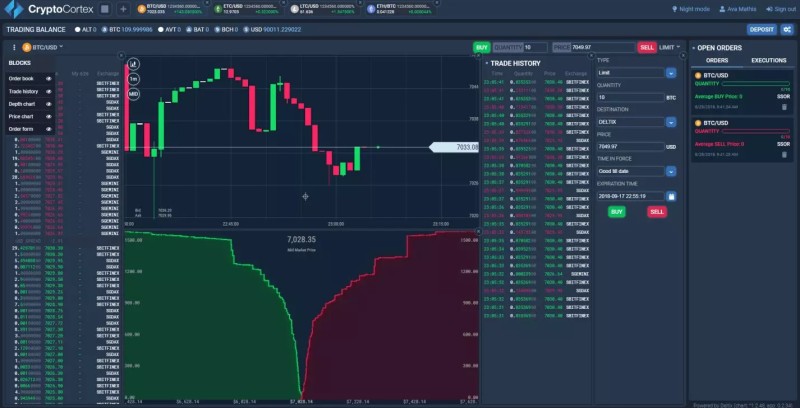
Institutional automated trading exists too, for the big fish. DELTIX made CryptoCortex to bridge big investors and crypto market. It offers FIX and multicast data, REST and web sockets, and links to over 15 venues, because why not.
API permission types
- Full API for your trading bots
- Read-only key for your trade journal
- Restricted key for price data only
- Institutional feeds for brokers
Ranked 2026 platforms: Europe rules, fiat ramps, fees
BitMEX for Perpetual Futures and Bots
BitMEX is a known cryptocurrency trading platform for algo trading. Its perpetual futures (PERPS) have no expiry, which is either great or terrifying. You can go long or short with leverage, like a financial seesaw.
Traders use ccxt library to get OHLCV data. Then they apply math like MACD or GARCH to guess volatility, because math knows. Backtesting in Python is common. This is not for total newbies, but the tools are there if you dare.
Different data types exist: trade data, quote data, level 2 and 3 order book, derived data like VWAP, and derivatives data. The XBTUSD pair is popular for liquidity and volatility, a favorite rollercoaster.
BitMEX stands out in the crypto trading sphere for its perpetual futures and sophisticated trading options.
Reading Your Trades With Bitfinex and TradesViz
Bitfinex is another exchange. You can link it to TradesViz, a trade journal, with a read-only key. The steps are clear: make key, set read-only, confirm email, paste into TradesViz-like a recipe but less tasty.
This link only reads orders and history. It cannot trade for you, sadly. It supports pairs like BTCUSDT tagged as crypto. Handy for folks who like to review their mistakes in color.
To create the key, log in, click API, create new key, select read-only for account history and wallets. Label it, generate, confirm via email, then enter in TradesViz popup. Boom, connected.
Picking the Best Online Cryptocurrency Trading Platform
So you ask what is the best crypto platform . The honest answer: it depends on your needs, because nothing is simple. I lean toward security and clear fees first, then vibes.
A cryptocurrency trading platform that fits you should match your trade style. Day traders need depth charts. Option traders need strategy visual tools. Don’t trust every review; some are biased because someone paid them.
If you are in the states, you might look at crypto platform usa options that follow local rules, because Uncle Sam. And which crypto platform is best in usa is a common search; just compare features side by side like a sane person.
The reputation of the broker or intermediary matters, as it should. Some platforms only work with specific brokers. Others may require qualification like minimum equity. Check feedback ratings but stay skeptical, because internet strangers lie.
Is Crypto Trading Legit and Safe
People often ask is crypto trading legit . The short answer is yes, but risks exist like with most things. Exchanges are real businesses, some regulated. But you can lose coins from hacks or bad keys, which sucks.
Private key control is the hard part. Whoever holds the key holds the asset, full stop. A single leak can mean permanent loss. So a trustworthy cryptocurrency trading platform with strong key care is a must, not a nice-to-have.
Cloud solutions like secure enclaves help developers connect traditional infra with blockchain. Chainlink data feeds on AWS marketplace give reliable price info. These back the modern venues you use, quietly.
Ways to protect your coins
- Use platforms that have cold storage
- Enable two-factor auth (please)
- Keep keys offline when humanly possible
- Read independent reviews (not the paid ones)
Sites Like Binance and Other Options
When you want alternatives, sites like binance include Coinbase, BitMEX, Bitfinex, and more. Each has its own focus. Some are big super apps, others are niche, like a diner vs a food truck.
A cryptocurrency trading platform should not feel like a maze designed by a sadist. If the interface makes you want to cry, move on. Try a few with small amounts first, like a test drive.
Proprietary platforms mimic large brokerage models, as we said. Commercial ones aim at retail with useful features. Some specialize in certain products, so match your goal to their strength, not the other way around.
Learning How to Trade Crypto for Beginners
If you are starting, learning how to trade crypto for beginners means first grasp the basics, like what a coin even is. Use a simple cryptocurrency trading platform with clear menus, not a spaceship cockpit.
Watch market news and rules. Start with major coins. And remember, a trading platform for crypto is a tool, not a casino-though it can feel like one. Take your time.
The source gives a step-by-step: research security, consider fees, review coins, create account, fund, then trade. Follow that and you’ll avoid many dumb mistakes. I know the learning curve feels steep, but it gets better, promise.











Comments on “How to Choose a Cryptocurrency Trading Platform That Actually Fits Your Needs (And Doesn’t Make Off With Your Coins)”
No comments yet. Be the first to share your thoughts.