
What the CoinDesk 20 Actually Tells Us
I've been staring at crypto price screens for a while now, and there's something that keeps bugging me. Most people look at Bitcoin and call it a day. Maybe they peek at Ether. But the CoinDesk 20 - or CD20 if you're in a hurry - is sitting right there showing you a much wider basket of crypto assets , and nobody talks about it enough. It's not just a Bitcoin tracker. It's twenty different tokens moving together, sometimes in sync, sometimes doing their own weird thing, and that picture tells you way more about what's actually happening than any single price ever could.
When Geopolitics Shows Up in Your Portfolio
So picture this. It's a Monday. Prediction markets suddenly think a U.S.-Iran peace deal might actually happen - odds jumping from 14% to 37% in a couple days. Bitcoin pops 1.6%. Ether adds 1.4%. The whole CD20 climbs 1.56%. Oil drops 5%. Gold rises. The dollar slips. All from one headline. The kind of headline that moves everything at once . I watched this play out in real time and it's a reminder: crypto doesn't live in a vacuum. It breathes the same air as stocks, bonds, and commodities. When traders get less scared about the Strait of Hormuz, they buy risk assets. Crypto is a risk asset. That's the whole story sometimes.
Ran Neuner on Bitcoin's $82K pullback and golden cross
The Winning Streak That Wasn't
Here's the thing that got me though. A few days later, Bitcoin was down 5.5% on the week. May was shaping up to be the first losing month in three. The Nasdaq was up 8%. The S&P 500 up 5%. Stocks were partying. Crypto was sulking. And the whole time, spot Bitcoin ETFs were bleeding - ten straight days of outflows, $2.97 billion total. That's not noise. That's people pulling money. You start wondering what the smart money knows that you don't . But then you look at derivatives and open interest is stable. Funding rates are positive. Options skew is modestly bullish. The data is split. The market is confused. And honestly? So am I.
Stellar's Moment in the Sun
While Bitcoin was figuring itself out, XLM did something wild. Forty percent in one day. From $0.14 to $0.28. Market cap past $9.6 billion. The catalyst? DTCC - the Depository Trust & Clearing Corporation, the plumbing that handles $114 trillion in assets - announced they're connecting their tokenized securities platform to Stellar. First public blockchain in their multichain strategy. Production testing targeted for July. This wasn't a meme pump. Open interest rose 11%. Spot volume hit $2.3 billion. Real money showed up. A token everyone forgot about suddenly matters again . It cleared a descending channel that had trapped it for months. Sometimes the chart tells you the news before the news tells you the chart.
Strategy Sold Bitcoin. Again.

This one feels personal. Strategy - the company formerly known as MicroStrategy - sold 32 Bitcoin in May. Only the second time in their history. The first was December 2022, near the bottom, 704 BTC for tax-loss harvesting. Then they bought 810 two days later. This time? 32 BTC for $2.5 million to fund preferred stock distributions. Less than 0.004% of their stack. Financially meaningless. But symbolically? Loud. Peter Schiff called it the beginning of the end. Michael Saylor tweeted about making their preferred stock "the best credit instrument in the world." The company now runs a complex capital structure - convertible debt, common equity, multiple preferred series - all designed to acquire more Bitcoin per share, not just more Bitcoin total. The math changed from simple accumulation to per-share optimization . They're still buying aggressively. But the taboo is broken. They've sold twice now. The question isn't "will they sell" anymore. It's "will selling become routine?"
Michael Terpin maps Bitcoin's path to $120K and beyond
Vitalik Wants to Rewrite DeFi's Foundation

Then Vitalik drops a research post saying: what if we used options instead of debt for DeFi? Right now, you post collateral, borrow against it, and if the price drops fast you get liquidated. Liquidations cascade. Oracles get manipulated. People lose everything in seconds. His idea: index-tracking assets built on options contracts. No CDPs. No instant liquidations. Exposure drifts gradually instead of snapping. You could use "slow oracles" like prediction markets - updates every hour instead of every second. He'd feel "much safer" holding an algorithmic stablecoin built this way. The tradeoff? Constant rebalancing. Gas costs. Slippage. It's theoretical. Not live. But it's a reminder that the infrastructure we take for granted - exchanges, lending protocols, stablecoins - is still early, still fragile, still up for redesign.
XRP's Quiet Institutional Momentum
Ripple's Q1 2025 report landed while all this was happening. They're sunsetting the report format - said transparency got used against them by the old SEC - but the data is still there. XRP outperformed almost everything that quarter. Up nearly 50% at one point. Franklin Templeton filed for a spot XRP ETF. CME launched XRP futures. Brazil approved an XRP ETF. $37.7 million in quarterly inflows to XRP investment products, $214 million year-to-date - almost catching global Ether funds. The SEC dropped its appeal. The penalty dropped from $125M to $50M. SAB 121 repealed. OCC and FDIC gave banks green lights for crypto custody. Ripple bought Hidden Road for $1.25 billion to turn the XRP Ledger into infrastructure for foreign exchange, swaps, repos. Different tokens, different stories, but the institutional layer is thickening everywhere . XRP volume on top exchanges averaged $3.2 billion daily. Binance 40%. Upbit 15%. Coinbase 12%. DEX volume held up better than most chains. RLUSD - their stablecoin - past $90M market cap, $300M cumulative DEX volume. On-chain activity normalized after a huge Q4, but trustlines grew. Wallets grew. The plumbing is expanding.
What the Derivatives Are Whispering
Let me go back to the June open. Bitcoin at $68,930. Or $72,700 depending on which snapshot you caught. Down 2% on the CD20. Ether down 1%. DeFi Select Index down 2.6%. ONDO down 17% since the founder's death. HYPE hitting record highs four sessions in a row - new ETFs driving fresh capital. Open interest flat at $19.5B. Funding rates 0-10% annualized. Three-month basis at 2.8%, up from 2.2% - that's institutions slightly more willing to pay for leverage despite lower spot prices. Put/call ratio 61/39 calls. DVOL rising from multi-month lows. Term structure in contango - near-term calm, longer-term uncertainty. $282M in liquidations, 60/40 longs/shorts. Binance heatmap says watch $72,280 if price keeps falling. The numbers don't lie but they also don't explain themselves . You have to sit with them.
The Bigger Picture Nobody Summarizes
Here's what I keep coming back to. Crypto prices on CoinDesk - or any screen - aren't a single story. They're a collision. Geopolitics. ETF flows. Corporate treasury decisions. Derivatives positioning. Token-specific catalysts. Regulatory shifts. Infrastructure upgrades. A peace deal in Doha moves Bitcoin. A DTCC partnership moves Stellar. An SEC withdrawal moves XRP. A Vitalik blog post moves DeFi builders. Strategy's 32 BTC sale moves narratives. All at once. All overlapping. The CD20 captures some of this breadth. But even it misses the depth. You need more than a price feed to understand what's moving . You need the context. The plumbing. The incentives. The second-order effects. That's what I try to track. That's what this post is trying to be.
Week-in-review panel on hashrate drop, taxes, and Canada ETF
One Trader's Note in the Margin
I saw a comment from a trader - someone who's been through a few cycles - saying the hardest part isn't finding the catalyst. It's knowing which catalyst the market will actually price today. Peace deal odds? Priced. ETF outflows? Priced. DTCC partnership? Not priced until the announcement. Founder death? Priced slowly. New ETF launch? Priced fast. The market's attention is a spotlight, not a floodlight. It illuminates one thing at a time. Everything else sits in shadow until the beam swings. That's why the CD20 matters. That's why watching only Bitcoin blinds you. The spotlight moves. Your job is to see where it's been, where it is, and guess where it's going next.
The relevant issue was no longer whether Strategy would ever sell bitcoin, because it had done so in both 2022 and 2026. The issue was whether future sales would remain rare exceptions or become a routine tool for managing an increasingly sophisticated bitcoin treasury and financing operation.
What I'm Watching Next

June just started. The Iran situation isn't resolved. ETF flows could turn. DTCC-Stellar testing begins in July. Hidden Road integration unfolds. Vitalik's proposal gets debated. Strategy's next 8-K drops. The CD20 will keep ticking. Some days it'll make sense. Most days it won't. I'll be here watching the wider basket, not just the headliner. The answer changes every week anyway . That's the job. That's the game. And honestly? I wouldn't want it any other way.
Key threads I'm pulling on
- Whether ETF outflows sustain or reverse - that's the spot market's oxygen
- If Strategy's preferred stock model becomes a template for other corporate treasuries
- Whether options-based DeFi moves from theory to testnet to mainnet
- How Hidden Road uses the XRP Ledger for traditional finance plumbing
- Whether the CD20 divergence from equities persists or snaps back
The Screen Keeps Updating
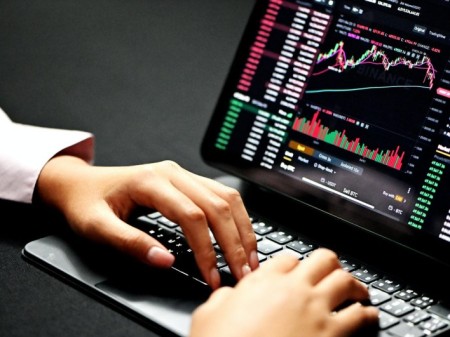
Price at $72,700. Now $72,680. Now $72,710. The numbers flicker. The headlines accumulate. The context compounds. I started this post thinking I'd explain what moves crypto prices. I'm ending it realizing the real answer is: everything moves them. All at once. In different directions. With different lag times. The skill isn't predicting the next tick. It's building a mental model wide enough to hold the contradictions without breaking. The CoinDesk 20 helps. So does reading the 8-Ks. So does watching the prediction markets. So does listening to the builders. None of it is enough alone. But together? Together you start to see the shape of the thing. A market that never closes, never simplifies, and never stops teaching . If you let it.










Comments on “How Crypto Prices Move on CoinDesk: What Shapes the Market and Why?”
No comments yet. Be the first to share your thoughts.