
Banks That Accept Cryptocurrency Deposits Are Officially a Thing
Ever tried to find a normal bank that doesn't have a tiny panic attack when you mention Bitcoin? I know the feeling-I've been there, staring at a declined wire with sweaty palms. The good news is that banks that accept cryptocurrency deposits are now a real option for many folks. They let you hold coins and spend cash without the old existential dread that used to come with crypto talk.
In this post, I'll walk through the banks that accept cryptocurrency deposits, what they charge, and the dumb mistakes that'll bite you in the ass. My goal is to help you pick one without wanting to throw your computer out the window. I'm just a regular person who actually read the rulebook so you don't have to, because I care about making this stuff not suck.
The short version: you don't need an MBA (or a stress ball) to find a bank that plays nice with digital money. I dug into the fee schemes and survived the identity-checking circus so you can skip the worst parts. Some of these places are for big hedge funds only, but others let us little guys in. The main point stands: banks that accept cryptocurrency deposits keep popping up in more countries like weird mushrooms.
When I first looked, I thought this was some fringe nonsense. But the quiet shift from 'no way' to 'okay, let's do it safe' is happening. You can now store Bitcoin just as easily as you swap tokens for government-issued money at certain places. That's a big deal for everyday users and businesses alike-like, actually big.
What Makes a Crypto-Friendly Bank Different
A crypto-friendly bank works under official blessing while mixing normal banking with crypto options. Unlike old-school lenders that treat digital cash like a contagious disease, these let you store Bitcoin and swap tokens for government money. They still follow AML and KYC rules (the annoying identity stuff), but they build systems that talk to public blockchains so the moves are smooth instead of janky.
Traditional banks like JPMorgan once eyed crypto with deep suspicion-like it was a suspicious lump on the financial body. Many would block transfers tied to exchanges with zero explanation (fun!). Digital-only banks without branches show more tolerance but often skip direct crypto features. The banks that accept cryptocurrency deposits stand out by doing both under one roof with a clear license, which is kind of the dream.
Why these banks matter
- They handle payroll and wire help for crypto businesses (so those businesses can, you know, pay people).
- They keep your coins in supervised safekeeping, not under some guy's mattress.
- They protect users shuffling between fiat and digital cash without the usual panic.
- They add actual oversight and monitoring to cut down on the risk of everything blowing up.
One big plus is handling both normal money and blockchain tokens in one authorized frame. That removes the mess of shuffling funds across separate platforms where oversight may halt your moves for no clear reason. Keeping property inside a supervised bank beats using unchecked trade spots where you have all the recourse of a goldfish.
Another point: seamless Bitcoin and altcoin transactions happen when banking interfaces meet digital ledgers. You can move from tokens to national currencies without waiting three business days. For a regular person, that means fewer headaches and fewer weird 'transaction declined' emails.
Five Crypto-Friendly Banks Ranked for Cashing Out
Rules and Licenses Behind the Scenes

Most reputable crypto banks run under solid legal frames. In Europe, the MiCA rule set gives standardized oversight across EU states for custody and transparency (bureaucratic but helpful). Banks that accept cryptocurrency deposits in the US use state charters like Wyoming SPDI or federal trust charters from the OCC to stay compliant, which is a relief.
Wyoming's SPDI frame lets banks act as fully regulated online-first banks that bridge digital and traditional finance. They must hold 100% of customer fiat in liquid assets-so no fractional reserve risk (remember 2008?). Kraken Financial and Custodia Bank use this path, and that full-reserve model means your dollars sit safe, not loaned out to some random dude.
Anchorage Digital Bank pulled off something no other crypto-native bank has: it became the first and only one to receive a national trust bank charter from the OCC.
Coinbase got conditional okay for a national trust charter, but trust banks can't take deposits directly without a partner bank (annoying fine print). The Independent Community Bankers of America called that approval 'a grave mistake' due to uneven burden-they were not thrilled. Coinbase says it won't take retail deposits or do fractional reserve, just custody and market infra for crypto, so calm down.
The GENIUS Act set rules for stablecoin issuers to back coins 100% with limited reserves like bank dollars or short Treasuries. It bars them from paying interest to holders-no free money. That keeps stablecoin folks from acting like banks that pay interest to attract deposits, which levels the field a bit.
In the US, clear state paths like Wyoming SPDI show that local lawmakers wanted a bridge (bless them). The OCC federal trust route gives national weight. Either way, the banks that accept cryptocurrency deposits must play by know-your-customer and anti-money-laundering books, which is good for you and me-keeps the baddies out.
US Banks That Accept Crypto Deposits
Let's look at the US side. Anchorage Digital Bank is the sole crypto-native bank with OCC trust charter. It serves big funds, DAOs, and corporate clients with custody, trading, staking, and governance under federal watch. Access is limited to large clients and corporate accounts with custom pricing and thorough checks-so not for your average Joe.
Kraken Financial is a Wyoming SPDI with full-reserve model. They keep 100% of fiat deposits in liquid assets, not loaned out to who-knows-who, and offer qualified custody for digital assets. Custodia Bank is another Wyoming SPDI focused on Bitcoin and USD banking for businesses only, no retail-sorry individuals. Both answer to the Wyoming Division of Banking, which sounds like a fun place to work.
US providers at a glance
- Anchorage Digital Bank, N.A. - federal trust, large client only (basically whales).
- Kraken Financial - Wyoming SPDI, full-reserve fiat (your dollars sit still).
- Custodia Bank - Wyoming SPDI, BTC focus, business only (no retail peons).
- BNY Mellon - big custodian, digital asset services for large clients.
- U.S. Bank - Bitcoin custody via NYDIG for fund managers.
- JPMorgan Chase - Onyx platform and JPM Coin for institutions (the giant woke up).
Customers Bank built CBIT token for real-time USD payments loved by large traders on exchanges (speed matters). Evolve Bank & Trust gives API hooks and FDIC cover for fiat deposits, plus digital asset custody for startups. Mercury helps tech startups with sub-accounts and virtual IBANs, and Ally Bank lets you link to exchanges but has no crypto division-half in, half out.
BankProv serves US crypto businesses with APIs and tailored infra for mining firms (the noisy computers). Coinbase restored direct-deposit feature after an 18-month break, letting paychecks go into crypto accounts and auto-invest in USDC. Limits rose to $200,000 per week. Cash balances sit in pooled custodial accounts at insured banks, but crypto isn't FDIC insured-so watch that line like a hawk.
BNY Mellon is the world's largest custodian and offers unified crypto and tokenized asset services with cold storage multi-sig wallets and daily attestation for stablecoin reserves (fancy). U.S. Bank re-entered with Bitcoin custody for spot ETFs via NYDIG. JPMorgan built Onyx settlement and JPM Coin for institutional use, showing even old giants moved off the fence-shocking everyone.
European Banks That Play Nice With Crypto
Across the pond, Sygnum Bank holds a FINMA license in Switzerland and MAS license in Singapore. It was the world's first digital asset bank, offering custody, crypto-backed loans, staking, and tokenization for pro clients. SEBA Bank, now AMINA, is FINMA-licensed with hubs in Zurich, Abu Dhabi, and Hong Kong, giving a broad product suite that'll make your head spin.
Fidor Bank in Germany partnered with Bitcoin.de back in 2013 and sits under BaFin (early adopter). Bank Frick in Liechtenstein follows the Blockchain Act and supports BTC, ETH, LTC, XRP, BCH. SolarisBank gives modular tech for fintechs and crypto exchanges with open APIs, benefiting from Germany's supportive stance on blockchain-nice.
European picks
- Sygnum Bank - multi-license, lending and tokenization (the full Swiss package).
- AMINA Bank - regulated custody and yield products.
- Fidor Bank - early adopter, retail friendly in EU (a rare breed).
- Bank Frick - EEA-regulated for crypto businesses.
- Revolut - 45M+ users, buy/sell 100+ cryptos in app (your cousin probably has it).
- Januar - licensed payment institute under MiCA.
Clear Junction helps cross-border payments for exchanges in over 180 countries with streamlined monitoring (big net). Revolut holds European banking permit via Lithuania and UK e-money licence, letting users withdraw to external wallets. Monzo allows crypto transactions but flags high-risk platforms, and Lloyds lets debit card crypto buys but blocks credit card purchases to shield you from debt traps-responsible.
These banks that accept cryptocurrency deposits in Europe show a patchwork of licenses, but the trend is toward standard rules under MiCA (one rulebook to rule them all). For a normal user, Revolut or Fidor may be the easy door. For bigger needs, Sygnum or AMINA give a full suite with audits and cross-border help.
Revolut, Wirex, Juno, Cash App, Quontic Compared for 2025
Asia-Pacific Options for Crypto Banking
DBS Bank in Singapore got MAS approval and runs DBS Digital Exchange as part of a big banking entity. It offers institutional crypto trade, secure storage, tokenization, and fractional ownership of tokenized assets (fancy). SBI Sumishin Net Bank in Japan links SBI Holdings and Sumitomo Mitsui Trust Bank for crypto trade and yield products under local rules.
For everyday users, the gap remains wide between big bank services and retail needs in this region-still a bummer. But the trend is clear: more normal banks now see crypto as just another asset class to handle with care. I like seeing the quiet shift from 'no way' to 'okay, let's do it safe' across the map.
The banks that accept cryptocurrency deposits in Asia tend to focus on institutional links first. Still, the backbone they build makes it easier for smaller apps to plug in later. If you run a business there, these names are worth a look for custody and settlement-don't sleep on them.
Global Bridges for Crypto Businesses
Fiat Republic acts as a layer between crypto firms and the traditional system, pooling many banking providers to stop de-banking (a real problem). BCB Group serves big exchanges and OTC desks with liquidity and near-instant settlement via BLINC network, regulated by UK FCA. These help companies that move large sums daily without getting cut off-crucial.
Combine a regulated bank for custody with a payment gateway for everyday transactions.
When you run a crypto business, you learn fast that one bank rarely does it all (shocking). The smart play is mixing a strict custody bank with an easy-pay partner. That way you keep coins safe and still pay staff on time, which is what every owner wants-revolutionary.
Global solutions like these show that banks that accept cryptocurrency deposits don't have to be a single shop. They can be a network of supervised pieces that talk to each other. For a regular person, this means more options and fewer frozen wires when you move money around-bless.
Stablecoins and the Bank Worry

Stablecoins are coins meant to hold a steady value, usually one per dollar (boring but useful). The GENIUS Act bars issuers from paying interest, but they earn from reserves like T-bills and money market funds. Circle issues USDC and shares some interest with Coinbase, which then offers rewards on site, drawing heat as a workaround yield-bearing stablecoin-people are side-eyeing.
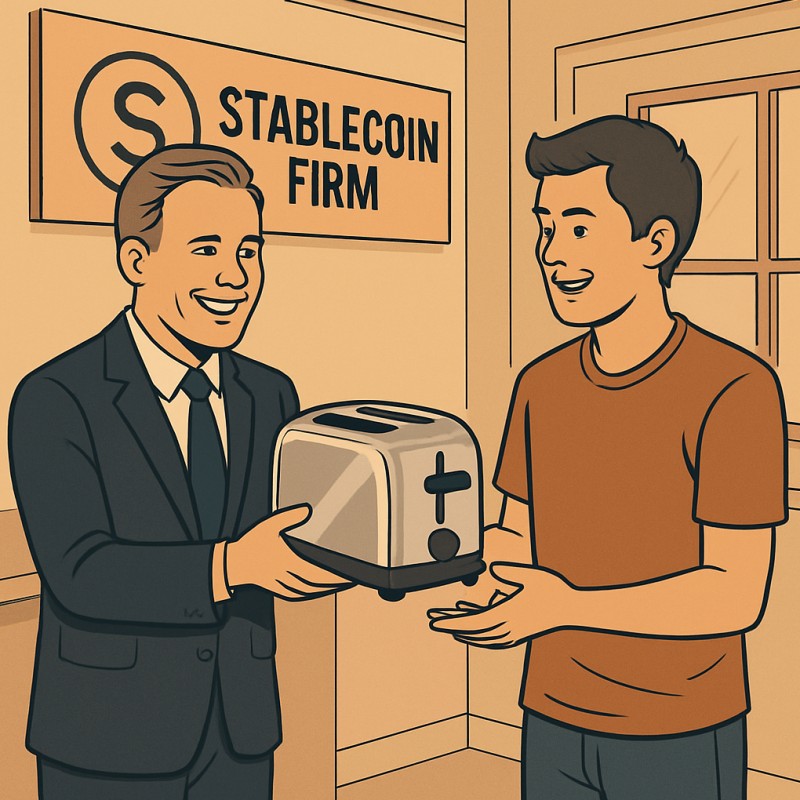
Banks fear losing deposits to stablecoins, with community banks most at risk since they rely on deposits to fund loans (classic). The Bank Policy Institute argues if you want to act like a bank, you take the full rule set and insurance. Old rules from 1933 blocked banks from paying interest on checking, later eased in 1980 with NOW accounts and before that free toasters-remember the toaster era?
Treasury folks testified stablecoins could grow huge over time from a smaller base relative to M2 money (scary potential). Tether is largest issuer with about two-thirds market and holds reserves including bitcoin, not fully audited-red flag. Risks include runs if reserve value is doubted, like pre-FDIC bank panics that hurt regular savers (not fun).
The result is something that critics say looks a lot like a yield-bearing stablecoin. Coinbase says the reward program is separate from its revenue-sharing deal with Circle.
A major US payments and fintech company announced the launch of contactless stablecoin payments using its Tap to Pay software. That shows stablecoins creeping into daily spend (like coffee). The banks that accept cryptocurrency deposits watch this closely because it changes where people keep cash-they're nervous.
Cross-border appeal is real: stablecoins can offer lower fees than bank foreign exchange and instant clearance (nice). But the lack of full audit at some issuers is a red flag. I'd say treat them as handy tools, not your only safe bed-diversify, folks.
How to Pick the Right Bank for You
Choosing among banks that accept cryptocurrency deposits takes a clear head (and maybe a coffee). First, check which coins and wallet links they support; some only do BTC or ETH. Deposit and withdrawal rules matter: incoming from exchanges, SWIFT or SEPA, wait times, limits, and steep minimums for companies can trip you up.
My checklist for picking
- Supported coins and external wallet links for self-custody (don't get trapped).
- Deposit and withdrawal policies with real limits (read the fine print).
- Fees, licensing, and whether they reach your region (obviously).
- Security: cold storage, multi-sig, insured fiat but crypto often excluded (watch that).
- API and tool links that sync with your workflow (for nerds).
- Room to grow as your volume and assets change (future-proofing).
Fees differ a lot, so compare side by side (duh). Look at SOC audits and test APIs in a sandbox if you can. I also suggest a crypto tax tool to stay clean with the rules. And hey, don't skip the KYC step even if it feels like a circus-it's the gate to get in and keeps the bad actors out.
Think about custody versus daily access. A bank may give great safekeeping but poor card support. You might pair it with a neo bank for spend. That mix is common and saves nerves when you need both safety and speed-like a financial outfit change.
Mistakes I See People Make
Folks jump into a crypto bank without reading custody terms (classic). They assume FDIC covers their coins, but crypto is often excluded from deposit protection. That's a nasty surprise in a downturn when you thought you were safe-oops.
Dumb mistakes to avoid
- Thinking crypto holdings get FDIC insurance automatically (they don't).
- Ignoring minimum balance or volume rules for business accounts (they will bite).
- Mixing retail needs with large-client-only banks (mismatch city).
- Skipping the fee schedule until after a big move (painful).
- Not checking if your region is served by the charter (grounds for rejection).
Another error: using a bank that rejects exchange links, then wondering why wires bounce. Some traditional banks still freeze crypto-tied flows with no note (rude). The banks that accept cryptocurrency deposits fix this by design, but you still must pick the right one for your use case-don't blame the bank.
People also forget that custom pricing for big clients may not apply to them. They call a private bank and get shut down (awkward). Read the access lines before you waste time on onboarding that was never going to pan out-save your pride.
Crypto Wallets and Getting Coins In
Before you bank, you need a place to hold keys (the digital kind). If you want to open a supervised cryptocurrency wallet at a bank that's actually watching your back, ask if they let you link outside storage. Many users also look for a digital cryptocurrency wallet that works with their phone and keeps keys handy-because convenience.
You might search a free crypto wallets list to compare options without spending a dime. Or you may want crypto wallets that accept credit cards for quick top-ups when the bank lane is slow. I found that crypto wallets like coinbase are common but not the only path, so shop around, my friend.
Keeping property inside an officially supervised bank system offers more safeguards than using unchecked trading venues.
To get your hands on cryptocurrency you usually buy on an exchange then move to bank custody. You'll need your crypto currency wallet address handy for transfers so the money lands right. And if you buy a cryptocurrency through a bank partner, fees can be lower than a random sketchy site.
A reputable crypto wallet matters as much as the bank itself (don't skimp). Some banks let you use swift crypto currency rails for cross-border coin moves, which is handy for global teams. Just match the wallet type to the bank's allowed networks and you'll avoid lost funds-simple but easy to mess up.
I'll say it plain: your wallet and your bank should work as a team. If the bank supports the same chain as your wallet, life is easy. If not, you'll pay extra converts and wait longer than you'd like-annoying but true.
First Security Bank Solutions Pitches Crypto Deposits Alongside Revolut and Sygnum
Checking a Bank's Security and Fees
Security features vary. Regulated crypto banks follow AML, customer checks, monitoring, and national supervision (the boring but vital stuff). Unlicensed spots lack these layers and leave room for theft. Regulated ones offer legal fix paths, open pricing, and separate asset holding under oversight-big difference.
Fees show up as custody costs, deposit or withdrawal charges, and network tolls. BNY Mellon and U.S. Bank target big clients with bespoke pricing. Smaller neo banks may bake costs into exchange rates. Always read the fine print before moving a dime, because surprises hurt-like a hidden 1% fee.
Security signs to verify
- Cold storage and multi-signature for keys (no single point of failure).
- SOC 1 and SOC 2 Type II audit reports (nerdy but key).
- Bankruptcy-remote custody of your assets (so you're safe if they sink).
- FDIC for fiat but clear note on crypto exclusion (read the asterisk).
I once skimmed a terms page and missed a 1% hidden convert fee-ouch. Don't be like me; take the five minutes. The banks that accept cryptocurrency deposits should hand you a clear sheet, not a maze of vague words.
Look for names that publish attestations and audits. Sygnum and AMINA both cite SOC reports, as does Anchorage. That public proof is a green flag when you compare. If a bank hides its checks, I'd walk away slow-creepy.
Decentralized Options vs Regular Banks
DeFi platforms like Aave, MakerDAO, and Compound let you bank by code with no ID checks and open border access (wild west). But there's no authority to call if things break-good luck. Hybrid models tie DeFi reach to traditional oversight, gaining ground under MiCA and shifting US signals for safer crypto use.
Revolut shows how a mainstream neo bank adds crypto access without going fully decentralized. For many users, that middle path feels safe yet flexible. I get the appeal of self-custody, but a regulated bank adds a pillow for your head when markets get wild-nice metaphor.
The banks that accept cryptocurrency deposits are not trying to kill DeFi. They just add a supervised layer so your grandma could maybe use it someday. That bridge is what makes crypto less scary for new money-bless the bridge.
Old School Bank Rules and Stablecoin Twist
Back in 1933, Regulation Q stopped commercial banks from paying interest on checking deposits. By 1980, Congress allowed NOW accounts, and before that banks gave toasters and radios as perks. If stablecoin interest bans tighten, we might see free toasters again-funny but real as history repeats.
FDIC brokered deposit rules changed over time: proposed in late 2019, final in late 2020, effective April 2021. Well-capitalized banks may take brokered deposits free; others need waiver. Silvergate data from 2018 to 2022 showed deposit growth from $1.7B to $14.8B then down to $6.3B, with brokered CDs a chunk of the mix (rollercoaster).
Silvergate used brokered CDs explicitly retained as brokered under FDIC rule.
The CLARITY Act targets non-stablecoin crypto and passed the House but stalled in the Senate. If enacted, Coinbase as custodian could fall under it. This stuff is dry, but it shapes which banks that accept cryptocurrency deposits stay open and how they serve you-policy matters.
We can learn from old bank runs and the toaster era. Rules exist to keep trust, and crypto banks now live inside those rules in many places. That's a win for regular users who want coin access without the wild west feel-hooray for rules.
My Quick Take on the Top Picks
If you need strong custody, Anchorage or Kraken give federal charters and strict safekeeping. For global multi-license support, Sygnum covers Switzerland and Singapore with lending. For fund services, BNY Mellon and U.S. Bank plug into existing manager setups with proven name weight (big names).
For daily use, pair a regulated custody bank with a payment app like Revolut or a gateway. That mix keeps you sane. At the end of the day, banks that accept cryptocurrency deposits are here, and you can choose without losing your mind if you read the basics first-promise.
I hope this rundown helps you skip the worst traps. The space keeps changing, but the core need is simple: a safe place for coins and cash that talks to each other. Go slow, read terms, and pick what fits your life rather than the loudest ad-your future self will thank you.










Comments on “How to Pick Banks That Accept Cryptocurrency Deposits Without Throwing Your Laptop Out the Window”
No comments yet. Be the first to share your thoughts.