
How Cryptocurrency Is Produced, Validated, and Brought Into Circulation
If you search for how to produce cryptocurrency , the answer can sound like one giant machine with one big button. It isn't. Production can mean making a coin or token, adding records to a network, checking a transaction or claim, and putting assets into circulation. Those jobs can happen in different places, and one does not prove the others happened. It is like saying “we made a phone” when you mean the factory built it, a carrier checked it, a shop sold it, and you plugged it in.
Creating an asset, recording a transfer, checking a claim, and circulating the asset are separate jobs.
This split matters because a project can create a token while a separate system decides who may receive it. That was the case in the Worldcoin example, where token creation and identity checks lived in different systems. Before you ask how to produce cryptocurrency, ask which job you mean. I find this is where most of the fog clears up.
CoinMarketCap's three ways to launch a coin
Four Jobs Often Mixed Together
A clean way to think about cryptocurrency production is to split it into four buckets. The buckets are creation, recording, validation, and circulation. They may use the same blockchain, but they do not have the same job. One system can write a token contract while another checks a person's eligibility for an airdrop.
Four jobs often mixed together
- Create: write the code and rules for a coin or token.
- Record: add transaction data to a shared ledger.
- Validate: check a transaction or claim under network rules.
- Circulate: make an asset available through transfers, trades, sales, rewards, or airdrops.
These jobs can overlap, but they should not be collapsed into one. Creating code does not prove that a transaction was accepted. Recording a transfer does not prove that a token's creator followed every legal rule. And an asset can exist without being widely traded. So a full answer to how to produce cryptocurrency has to name each layer instead of pointing at one magic box.
Bitcoin, Dogecoin, Ethereum, NFTs in one plain-English guide
Blockchain as a Shared Record Book
Here is blockchain technology, explained without too much fog. A blockchain is a shared digital book for recording cryptocurrency transactions. Many computers around the world hold copies of those records, so no single computer has the only copy. A computer holding these replicated transaction records is part of what people call distributed ledger technology. For a short answer to what a blockchain is , think of records copied across many computers and checked under shared network rules.
Once a transaction is recorded, it cannot be deleted or canceled.
The no-delete rule does not mean every recorded claim is automatically true. It means the ledger keeps the record while the network's rules decide whether it belongs there. It also does not make every user anonymous. Public addresses and transaction patterns can still give outside groups clues. The ledger is permanent, but people and groups can sometimes work backward from what it shows.
Creating a Coin or Token
Creating a coin or token means writing software and setting rules for supply, ownership, transfers, or distribution. Bitcoin came into existence in 2009, and the source notes that the right tools, resources, and technical knowledge can let almost anyone create a cryptocurrency. But there is no coin-shaped object sitting in a vault waiting to be picked up. The asset exists because a set of code and network rules says how it should work.
Examples with different structures
- Bitcoin is a coin and network that began in 2009.
- Ethereum supplies infrastructure for apps and smart contracts, while Ether, or ETH, is its cryptocurrency.
- XRP is used on the Ripple network, which was made for cross-border transfers with fewer fees.
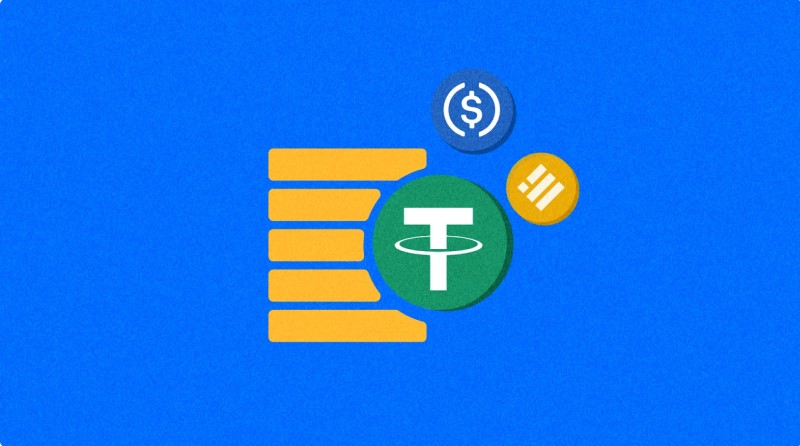
- Tether, or USDT, is a stablecoin issued by Tether and pegged to the U.S. dollar.
Startups can also issue tokens through initial coin offerings, or ICOs, to raise funds. That creates and distributes a token for a stated purpose, but it does not explain the whole network. An ICO does not by itself tell you how transactions are checked or written. It is one part of production, not the full job.
Make a token on SUI in under a minute
How Mining Adds and Validates Records
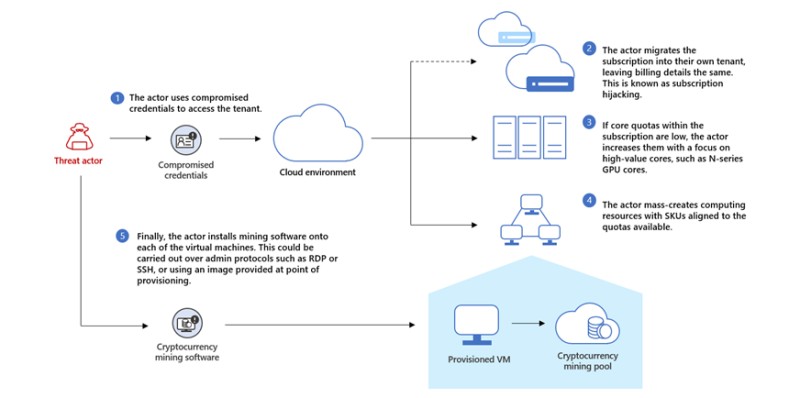
When most people ask how to produce cryptocurrency, they often mean mining. In plain terms, how mining for crypto works through computing work tied to a network. A crypto currency miner uses computing power and a cryptocurrency mining machine to perform that work. The purpose is connected to adding transactions to the network. More work and more resources cost more, which is why mining has a real production price.
The mining path in plain words
- A miner spends computing resources on work tied to the network.
- The network checks transaction records under its rules.
- Accepted records are written into the shared ledger.
- Any new coin supply follows the network's own supply rules.
Mining is the computing work tied to adding records, not a button that prints money.
There is no one recipe for how crypto mining is done . Networks use different rules, and not every asset comes from mining. A token can be issued under a smart contract and sent through an airdrop without following the same path as a mined coin. So an answer to how to produce cryptocurrency must name the network and asset. Without those names, “mining” is doing too much work.
Mining Machines and Production Costs
Mining cost is often called the price of producing cryptocurrency. That includes at least the machine and the resources it uses while working. If a page tells you to buy a mining rig , the purchase price is only one part of the bill. A search for a crypto mining rig for sale shows what a seller asks, not what the machine will produce or what it will cost to run.
Questions behind mining cost
- How much does the mining machine cost?
- What resources does the machine use while it works?
- Does the network create new coins under a fixed or changing supply rule?
- Could a token's sale price cover every cost if its price falls?
Mining cost is the price of producing cryptocurrency, not proof that mining will earn a profit.
A promise of free cryptocurrency mining deserves a careful look because the source treats machine work and resources as costs. If someone offers mining with no charge, ask who supplies the machine and who pays the resources. Nothing disappears just because the word “free” is attached. A real answer to how to produce cryptocurrency shows the full cost, not only the price tag.
Worldcoin's Separate Token Process
Worldcoin gives a clear example of why production needs to be split apart. Matthew Green's 2023 review described an EVM-based ERC20 token on the Optimism Layer 2 blockchain. The project said it could create tokens under a limited inflation model and distribute them to participants. A separate biometric system decided who could enroll and show eligibility. Token creation and identity checks were related, but they were not the same task.
Worldcoin layers described in the review
- An ERC20 token contract held the token rules.
- A limited inflation rule controlled new token creation.
- The Worldcoin Orb checked a person's identity with an iris scan.
- An airdrop used separate proofs to distribute tokens.
The iris-registration process does not itself award tokens.
Worldcoin's marketing said the project aimed to serve the global unbanked through a form of universal basic income. The source identified Sam Altman as a funder and Alex Blania as the project's leader. Green's review was careful and conditional, since he had not checked every technical claim. The useful point is structural: a token system and a biometric eligibility system can exist without being the same thing.
Iris Identity and Zero-Knowledge Proofs
In the reviewed Worldcoin design, the Orb scanned one or both eyes and ran tests meant to show that they belonged to a living person. It made high-resolution iris images and normally turned them into a derived iris code inside the device. That code could leave the device, while a raw scan stayed inside unless the user asked for data custody. The system compared codes by distance rather than as exact matches because eyes and scans can change a little. The server then checked the new code against earlier codes. For the airdrop, the user's wallet created proofs with Semaphore, a zero-knowledge system from the Ethereum project with an architecture similar to Zcash. The proof could show that a valid identity commitment was controlled and unused without naming that commitment in public.
Data placement in the reviewed design
- Raw iris scans normally stayed inside the Orb unless the user chose data custody.
- A derived iris code was sent to a server run by Tools for Humanity.
- The wallet secret key and identity-commitment secret key stayed on the user's phone unless backups were enabled.
- A public identity commitment went to the blockchain without the iris code, while a zero-knowledge proof hid which commitment was used.
The proof was designed to show eligibility without naming the biometric record tied to it.
That setup can reduce a direct link, but it cannot erase every possible link. Public blockchain analysis, transaction timing, compromised systems, and backend logs could still reveal a connection. Optional phone numbers and email addresses could also identify a user. Worldcoin said stored scans would be encrypted, while the review assumed the project held the relevant key. Privacy claims need the whole path checked, not just the one step that looks safest.
Wallets, Exchanges, and Wider Circulation
Production is not quite done when an asset exists. The asset still has to reach people who can hold or use it. Wallets manage holdings and keys. Exchanges let people buy cryptocurrency with local currency, sell it for local currency, or trade one cryptocurrency for another. An exchange or wallet does not create the asset itself. It gives an existing asset a path into wider use.
Routes into wider circulation
- A person can send crypto directly from one wallet to another.
- An exchange can support a purchase with local currency.
- An exchange can support crypto-for-crypto trading.
- A seller can exchange crypto for local currency, while the wallet keeps track of the keys.
An exchange moves an asset around; it does not invent the underlying coin.
People often call crypto anonymous or pseudonymous, but those words hide an important difference. A public ledger may show addresses and amounts rather than names, yet analysts can sometimes connect those addresses to known people. Direct wallet transfers can remove a traditional middleman, but they do not remove public records. The same is true for claims about storing value outside cash: users may seek that use, but a network cannot promise that every token will hold its price.
Lost Keys and Large-Scale Crypto Thefts
Security enters the story as soon as a person controls valuable keys. Self-custody has a hard edge: lose the secret key, and you may lose access to the funds. In the reviewed Worldcoin design, Tools for Humanity could rebind an iris code to a new identity commitment, but that would not by itself transfer an old wallet. Biometric account recovery would need contract changes or a wallet that understands identity claims. The reviewed World App design allowed backups through a user-selected provider such as iCloud, but the reviewer could not verify the phone-recovery flow.
Security risks described in the report
- Signing-key theft can give an attacker control of a wallet.
- Phishing and malicious decentralized applications can target wallet users.
- Smart-contract mistakes can allow price manipulation or other unwanted behavior.
- Flash-loan pricing flaws can expose funds in decentralized finance systems.
- Bridges and other privileged systems can become high-value targets.
- Too much value in one system makes that system more attractive to attackers.
A wallet is only as strong as the key and the system protecting it.
A 2023 report estimated about $3.8 billion in cryptocurrency losses during 2022. It found smart-contract misconfigurations to be the largest attack pattern, often tied to price manipulation or unintended code behavior. Ten major flash-loan attacks had caused more than $500 million in losses. The report suggested storing signing keys offline, using multi-sign controls, separating vaults from everyday accounts, limiting access to large amounts, and testing contracts with independent reviewers.
What Mining Research Does and Does Not Show
Research by Yukun Liu and his co-authors tested mining cost as one possible factor behind cryptocurrency returns. They also tested volatility and the price-to-dividend ratio, which compares an asset's price with its earnings. Almost none of the common factors that guide stocks, metals, or currencies had the same relationship with crypto returns. That does not mean mining was free. It means mining cost did not act like the usual pricing factors in the cited study.
What the research did and did not show
- Mining cost is a real production expense.
- Mining cost did not behave like the common asset-pricing factors tested in the study.
- Crypto could not be treated like a traditional asset simply by using the same models.
- A missing pricing link does not prove that mining is safe or profitable.
Mining cost did not behave like the common factors behind stocks, metals, and currencies.
The same research did find signs of momentum and investor attention. Momentum means that an asset which has risen may keep rising for a short time. In the cited work, a rise of more than 20 percent during the prior week served as a buy signal. A large jump in Bitcoin posts was linked with a 2.5 percent rise in the following week's return. Those are study results from one sample, not promises about a future trade.
Legal Rules for Token Creation and Sales
Production also has a legal side. A 2025 U.S. policy discussion used “market structure” to describe whether crypto assets fell under securities or commodity rules. The Securities and Exchange Commission, or SEC, regulates securities such as stocks, bonds, and some investment contracts. The Commodity Futures Trading Commission, or CFTC, regulates many contracts based on commodities and other assets. The Howey test used an orange grove example: selling ownership shares while promising profits from the company's harvesting made the arrangement an investment contract. For crypto, how an asset is created, sold, and used can shape that analysis.
Why token production can carry legal risk
- Who creates and controls the token?
- Does the offer depend on a promise that buyers will earn profits from someone else's work?
- Is the token sold mainly for payment, use, speculation, or investment?
- How will the token reach exchanges, wallets, and the wider market?
Writing token code is a technical act; selling that token as an investment can raise securities-law duties.
In that 2025 discussion, most cryptocurrencies were described as securities, while Bitcoin and several other major cryptocurrencies were treated as commodities. Offerings involving a company that develops an asset, markets it, and presents it as an ongoing investment had a stronger basis for securities treatment. The SEC's rules focused on required disclosures, investigations, and enforcement, while CFTC rules relied more on self-certification and often required proof of wrongdoing in spot-market fraud cases. That was the legal setting described in 2025, not a promise that every classification stays fixed. A clear answer to how to produce cryptocurrency must name the issuer, contract, security checks, and circulation plan. A token launch can be technically complete and still carry legal duties.









Comments on “How Cryptocurrency Is Produced, Validated, and Brought Into Circulation”
No comments yet. Be the first to share your thoughts.